
Uemura Shōen: The Woman Who Changed Japanese Art
At 15 her painting was bought by a British prince. By the end of her life she was the first woman to receive Japan's Order of Culture. Discover Uemura Shōen, the painter who transformed bijin-ga and opened doors for women artists.

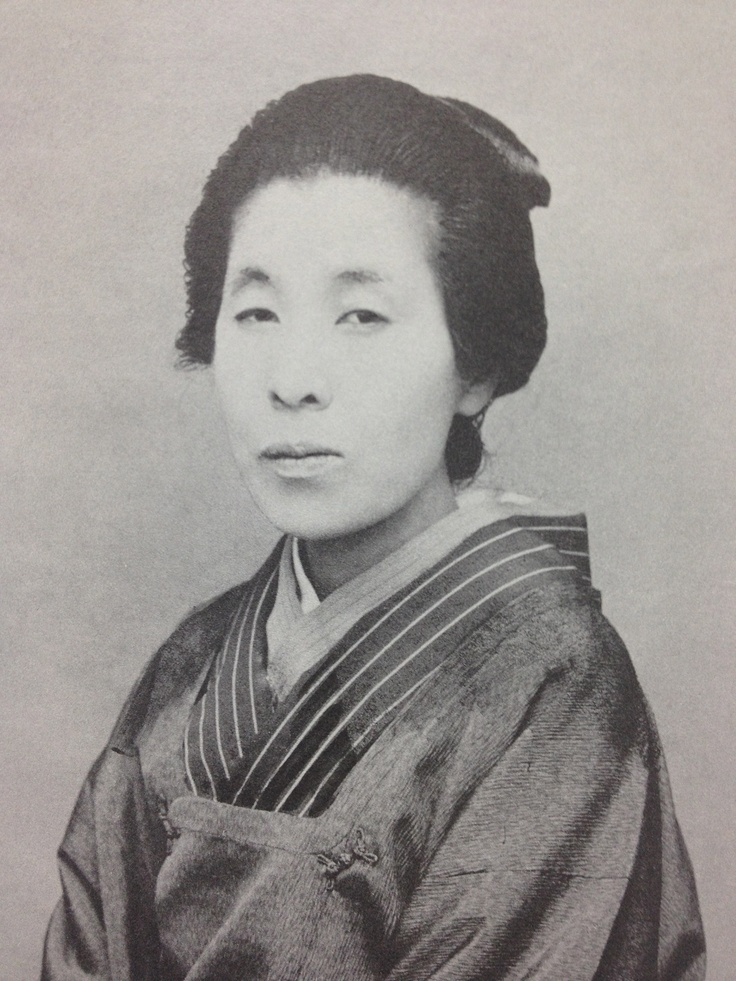
When Uemura Shōen picked up her brush in the late 19th century, a woman making a living as a painter in Japan was almost unheard of. Painting was considered a refined hobby for young women, something to practice at home, not a profession. Shōen ignored those expectations. By the age of 15 her work had been bought by a British prince, and by the end of her life she had become the first woman to receive Japan's Order of Culture.
Along the way she transformed bijin-ga, the tradition of painting beautiful women, into something deeper and more personal. This is the story of Uemura Shōen, the woman who changed Japanese art.
Uemura Shōen at a Glance
- Name: Uemura Shōen (上村松園), born Uemura Tsune
- Born: April 23, 1875, Kyoto
- Died: August 27, 1949, Nara
- Style: Nihonga (Japanese-style painting)
- Genre: Bijin-ga, paintings of beautiful women
- Teachers: Suzuki Shōnen, Kōno Bairei and Takeuchi Seihō
- Famous works: Flame (1918), Mother and Child (1934), Jo-no-mai (1936)
- Milestones: First woman member of the Imperial Art Academy (1941), Imperial Household Artist (1944), first woman to receive the Order of Culture (1948)
A Childhood in Kyoto's Tea Shop
Shōen was born Uemura Tsune in Kyoto in 1875, the second daughter of a family that ran a tea leaf shop. Her father died two months before she was born, and she was raised by her mother, Nakako, who kept the shop running on her own.
In an era when women were expected to marry and keep their artistic interests private, Shōen's mother made an unusual choice: she fully supported her daughter's dream of becoming a painter. That support would shape Shōen's entire life and, many years later, her art. After her mother's death in 1934, Shōen created some of her most tender images of mothers, children and the customs of the past.
Training at the Kyoto Prefectural Painting School
In 1887, at just 12 years old, Shōen entered the Kyoto Prefectural Painting School, the first public art school in Japan. There she studied under Suzuki Shōnen, a painter known for his bold landscapes. Recognizing her talent, Shōen's teacher allowed her to focus on figure painting and gave her the first character of his own art name. From then on, she was known as Shōen.
After about a year, she left the school to continue studying privately with Shōnen. She later trained with Kōno Bairei and, from 1895, with Takeuchi Seihō, one of the leading painters of the Kyoto school, who encouraged her to study classical works and to sketch from life.
What Is Nihonga?
Shōen worked in nihonga, which means "Japanese-style painting." The term appeared in the Meiji period to distinguish traditional Japanese painting from yōga, the Western-style oil painting that was arriving in Japan at the time.
Nihonga artists used traditional materials such as ink, mineral pigments and animal glue on silk or paper, and drew on centuries of Japanese painting traditions. At the same time, they absorbed new ideas about realism, composition and exhibition culture. The result was a modern art form rooted in Japanese tradition, and Shōen became one of its greatest masters.
Fame at 15
Shōen's breakthrough came remarkably early. In 1890, when she was only 15, her painting Four Seasons Beauties (Shiki Bijin Zu) won a first prize at the Third National Industrial Exhibition in Tokyo. The work was purchased by Prince Arthur, Duke of Connaught, a son of Queen Victoria who was visiting Japan.
The sale made headlines. A teenage girl from a Kyoto tea shop had become a celebrated painter almost overnight. In 1900 her painting Hanazakari (Full Bloom) won a silver medal at a major joint exhibition, cementing her reputation among established artists.
Breaking Barriers in a Man's World
Success did not make her path easy. As a young woman competing in a field dominated by men, Shōen faced restrictions in her training and, according to accounts of her life, slander and hostility from some of her male peers. She never married, and in 1902 she gave birth to a son, Shōkō, whom she raised independently while building her career.
Instead of retreating, she let her work speak for her. Year after year, her paintings won prizes at the government-sponsored exhibitions that defined success in the Japanese art world.
Redefining Bijin-ga: Beauty With an Inner Life
Bijin-ga, or "pictures of beautiful women," has a long history in Japan. In the Edo period it was one of the most popular subjects of ukiyo-e woodblock prints, where artists such as Kitagawa Utamaro portrayed famous courtesans, geisha and fashionable city women.
Shōen was deeply inspired by this tradition, including the imagery of ukiyo-e prints. But she took bijin-ga in a new direction. Alongside historical and literary heroines, she painted women in private, everyday moments: mothers with their children, young women at home, daughters of Kyoto's merchant families. Her figures are elegant and beautifully dressed, but above all they have dignity, composure and an inner life.
She explained her ideals in words that are still quoted today:
"I have never painted a woman thinking that it is enough for her simply to be beautiful. What I have always wished for is a painting like a fragrant jewel, clear and pure, without the slightest trace of vulgarity."
Working from Kyoto, she became the leading bijin-ga painter of western Japan, often paired with Kaburaki Kiyokata in Tokyo in the saying "Shōen in the west, Kiyokata in the east."
The Influence of Noh Theatre
Noh, Japan's classical masked theatre, became one of the most important influences on Shōen's art. From 1914 she studied Noh chanting with Kongō Iwao, an actor of the Kongō school, and Noh stories, masks and movements began to appear throughout her work.
In Noh, all roles, including women, were traditionally performed by men wearing masks. Shōen brought these stories back to real women, using female figures to express the emotions of Noh's heroines.
- Hanagatami (1915) draws on the Noh play of the same name about a woman driven to madness by love.
- Flame (Honō, 1918) portrays the jealous spirit of Lady Rokujō from The Tale of Genji, as she appears in the Noh play Aoi no Ue. With her hair clenched between her teeth and a pale, haunted face, she is one of the most unsettling figures in Japanese painting.
- Jo-no-mai (1936) shows a young woman performing the stately opening dance of a Noh piece, calm and utterly focused.
- Sōshi Arai Komachi (1937) is based on the Noh play about the poet Ono no Komachi washing away a false accusation.
Masterpieces of Uemura Shōen
Flame (Honō, 1918)
Flame is Shōen's most dramatic painting and a striking departure from her usual serenity. The spirit of Lady Rokujō turns to look back, a strand of hair caught in her teeth, her robe decorated with spider webs and wisteria. It shows that Shōen's idea of beauty could include jealousy, pain and obsession. The work is in the collection of the Tokyo National Museum.
Mother and Child (Boshi, 1934)
Painted in the year her mother died, Mother and Child shows a young mother in the dress and hairstyle of the Meiji era, tenderly holding her baby. It is a tribute to her own mother and to the vanishing customs of old Kyoto. The painting is held by the National Museum of Modern Art, Tokyo.
Jo-no-mai (1936)
Jo-no-mai is widely regarded as Shōen's masterpiece. A young woman in a vivid red kimono raises her fan at the start of a Noh dance, her posture perfectly balanced and her expression composed. Shōen herself saw it as the painting that best expressed her ideal of pure, dignified beauty. In 2000 it was designated an Important Cultural Property of Japan. According to the women artists' research organization AWARE, as of 2023 Shōen was the only woman artist of the modern era whose work had received this designation. The painting belongs to Tokyo University of the Arts.
Firsts for Women in Japanese Art
In the final decade of her life, Shōen received honors that no woman artist before her had achieved:
- 1941: She became the first woman member of the Imperial Art Academy.
- 1944: She was appointed an Imperial Household Artist (Teishitsu Gigei-in), only the second woman to receive the title after the nanga painter Noguchi Shōhin.
- 1948: She became the first woman to receive the Order of Culture, one of Japan's highest honors for contributions to art and culture.
Shōen died the following year, on August 27, 1949, in Nara, at the age of 74.
Legacy: Three Generations of Painters
Shōen's influence did not end with her own work. Her son, Uemura Shōkō, became a renowned nihonga painter of birds and flowers, and her grandson, Uemura Atsushi, continued the family tradition. Together they form one of the great artistic dynasties of modern Japan.
More broadly, Shōen opened doors for the women artists who followed her. She proved that a woman could build a professional career at the very top of the Japanese art world, and she showed that bijin-ga could be more than decoration. In her hands, it became a way of expressing the strength, dignity and inner life of women.
Where to See Uemura Shōen's Work
- Shōhaku Art Museum, Nara: Opened in 1994 with support from Kintetsu Corporation and donations from the Uemura family, this museum is dedicated to the work of Shōen, Shōkō and Atsushi.
- Tokyo National Museum: Home to Flame.
- National Museum of Modern Art, Tokyo: Home to Mother and Child.
- Tokyo University of the Arts: Owner of Jo-no-mai.
- Kyoto City KYOCERA Museum of Art: Holds works from her early career and has hosted major retrospectives of her art.
Paintings on silk are fragile, so many of these works are shown only for limited periods. Check each museum's exhibition schedule before you visit.
Frequently Asked Questions
Who was Uemura Shōen?
Uemura Shōen (1875 to 1949) was a Japanese painter from Kyoto and one of the most important nihonga artists of the modern era. She is best known for her bijin-ga, paintings of beautiful women, and was the first woman to receive Japan's Order of Culture.
What is Uemura Shōen known for?
She is known for elegant, dignified paintings of women, often inspired by Noh theatre, classical literature and everyday life in Kyoto. Famous works include Flame (1918), Mother and Child (1934) and Jo-no-mai (1936).
What is bijin-ga?
Bijin-ga means "pictures of beautiful women." The genre became popular in Edo period ukiyo-e prints and continued in modern Japanese painting. Shōen helped transform it by focusing on the character and inner life of her subjects rather than only their outward beauty.
What is nihonga?
Nihonga means "Japanese-style painting." It developed in the Meiji period as a modern form of traditional Japanese painting, using materials such as ink and mineral pigments on silk or paper, as distinct from Western-style oil painting.
What awards did Uemura Shōen receive?
She became the first woman member of the Imperial Art Academy in 1941, was appointed an Imperial Household Artist in 1944 and became the first woman to receive the Order of Culture in 1948.
Where can I see Uemura Shōen's paintings?
The Shōhaku Art Museum in Nara is dedicated to her work and that of her son and grandson. Major works are also held by the Tokyo National Museum, the National Museum of Modern Art, Tokyo and Tokyo University of the Arts.
Love discovering the artists who shaped Japanese art? Follow @jpnstudio2023 on Instagram for daily stories from the world of Japanese art, history and culture.