
Otagi Nenbutsu-ji: The Temple Where Anyone Could Become a Sculptor

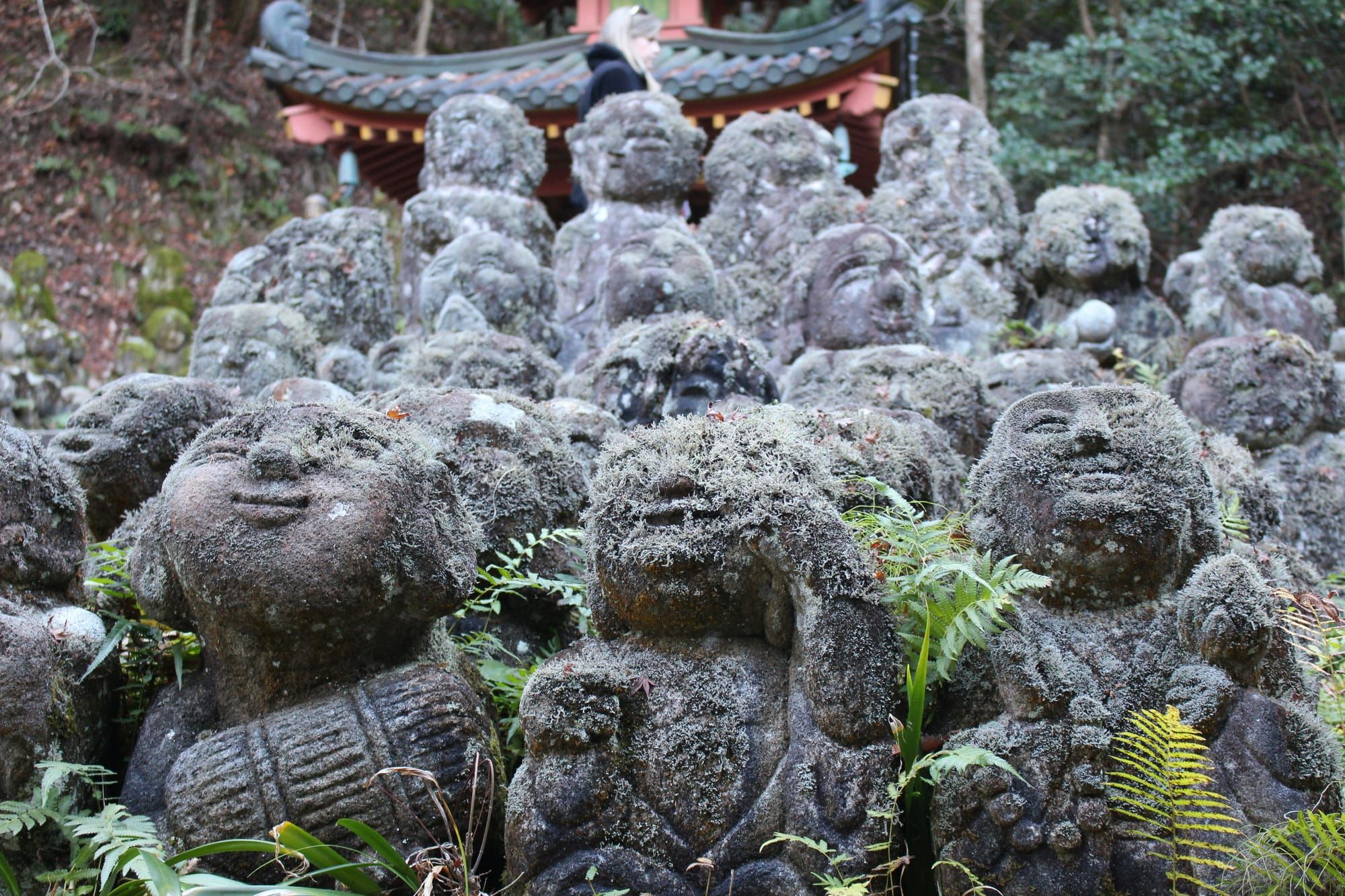
1,200 stone statues. 1,200 different pairs of hands. One hillside in Kyoto, somewhere that feels less like a temple and more like a gathering.
Otagi Nenbutsu-ji is home to 1,200 stone statues of Rakan, the disciples of Buddha. They sit scattered across a mossy hillside beneath maple trees. Some are praying. Some are laughing. Some are holding cameras, fans, sake cups, or small animals. A few look like they are mid-conversation.
Here is the detail that changes how you see them: almost none of them were carved by professional sculptors.
The Man Behind the Stone
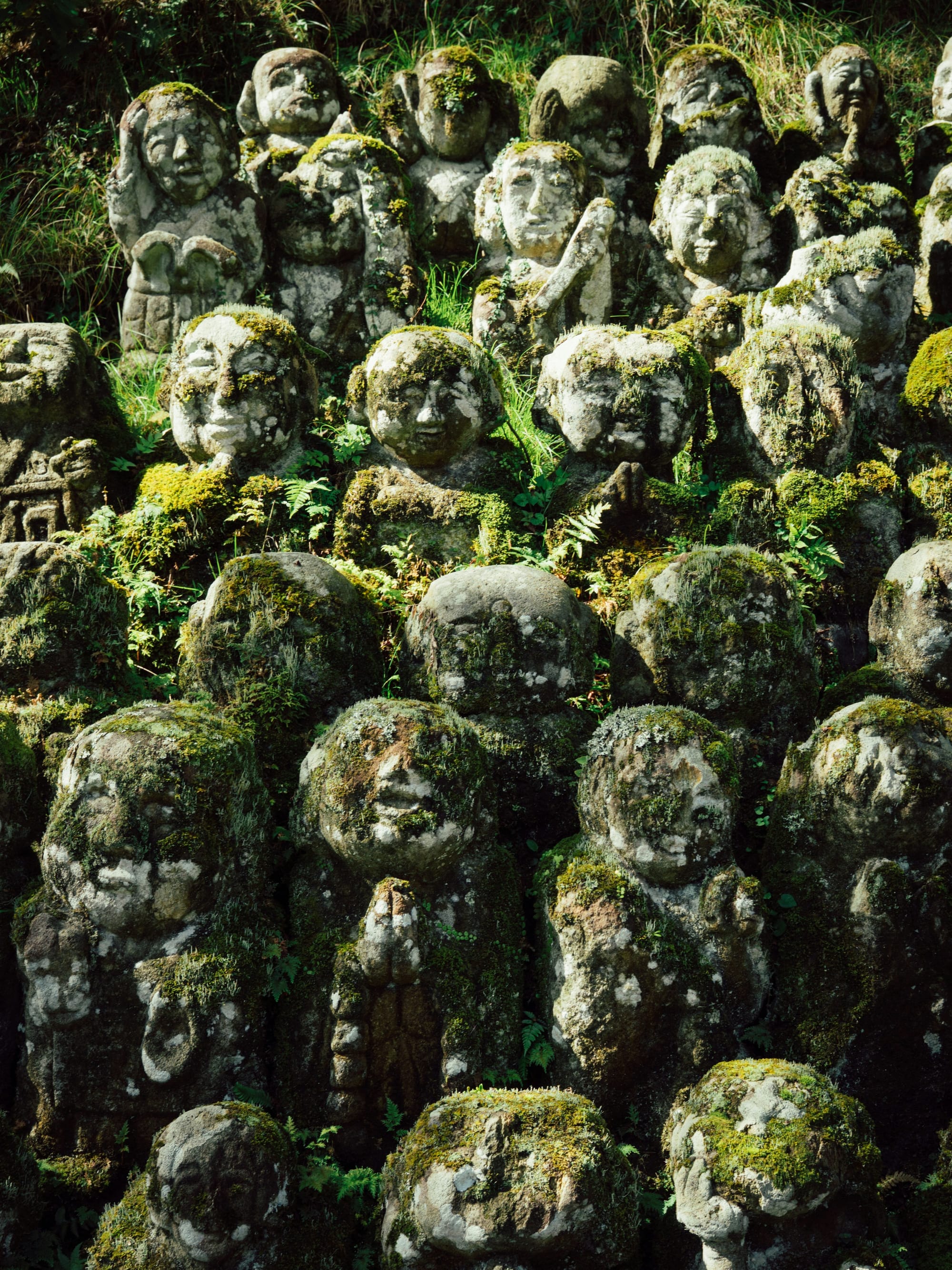
In 1955, a Buddhist sculptor and restorer named Kocho Nishimura became the chief abbot of a temple that had been destroyed repeatedly by floods, fires, and typhoons. Nishimura was also not only a monk he was a craftsman who had spent his life restoring Buddhist statues. When the temple was rebuilt in the early 1980s, he had an idea that was both practical and deeply human. He invited ordinary people from across the Kyoto area to come and carve their own Rakan statue. The plan was 500 statues over five years. Applications arrived from everywhere: amateurs, families, people carving memorials for loved ones or people carving something to mark their own lives. The first 500 were finished just in a single year. By the time the project ended, there were 1,200.
What Did They Carve?
Nishimura encouraged each carver to express themselves freely. The result is unlike any other religious monument in Japan.
Some statues are solemn. Some are laughing. Some are holding favorite animals, sports equipment, cameras, even cassette players, objects that carried personal meaning for the carver or the person they were honoring. It is said that Nishimura asked them to make the statues kawaii—cute. The result is a mix of silly, serious, somber, and tender figures that somehow feel more human than goddess. Every single one of them carved their own name on the back.
The conservator's perspective
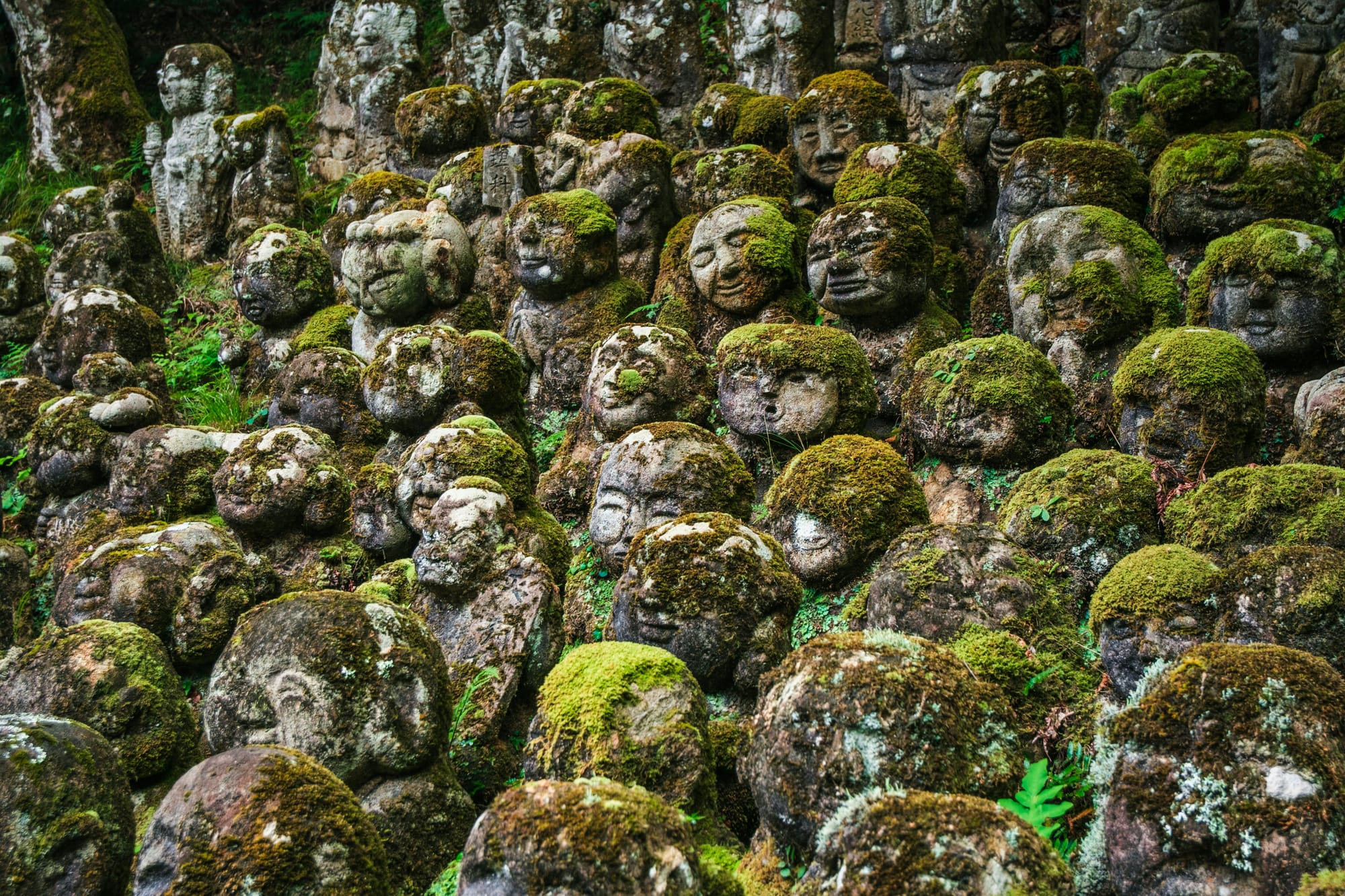
From a material standpoint, this temple is a fascinating case study. The statues are carved from stone, but they are not ancient. They were made between 1981 and 1991—only a few decades old. Yet in that short time, they have become covered in moss and look as if they have belonged to the mountain for centuries. This is the opposite of what I usually see in European conservation. In the West, we spend enormous effort fighting natural aging, removing biological growth, treating stone surfaces, slowing down decay. At Otagi Nenbutsu-ji, the moss is not damage. It is part of the artwork. The statues are also a lesson in intentional imperfection. No two are alike. Many are crude. Some are oddly shaped. But that is precisely the point. They were made by people who had never carved before, guided by a master who valued expression over precision.
Why It Matters
The temple has a long history of destruction. Founded in 766, it was flooded, burned, and moved multiple times before settling in its current location in 1922.
The statues were created as part of a restoration project , a way to rebuild not just a temple, but a community around it. Today, Otagi Nenbutsu-ji is known as "the temple of healing." Visitors wander the hillside, looking at the faces, laughing at the ones holding sake cups, and feeling a connection to the strangers who carved them. For me, as a conservator, this is one of the most inspiring things about Japanese approaches to material culture. The best preservation is not always about freezing something in time. Sometimes, it is about letting everyone leave their mark.