
Kawara (瓦): The Traditional Japanese Roof Tile

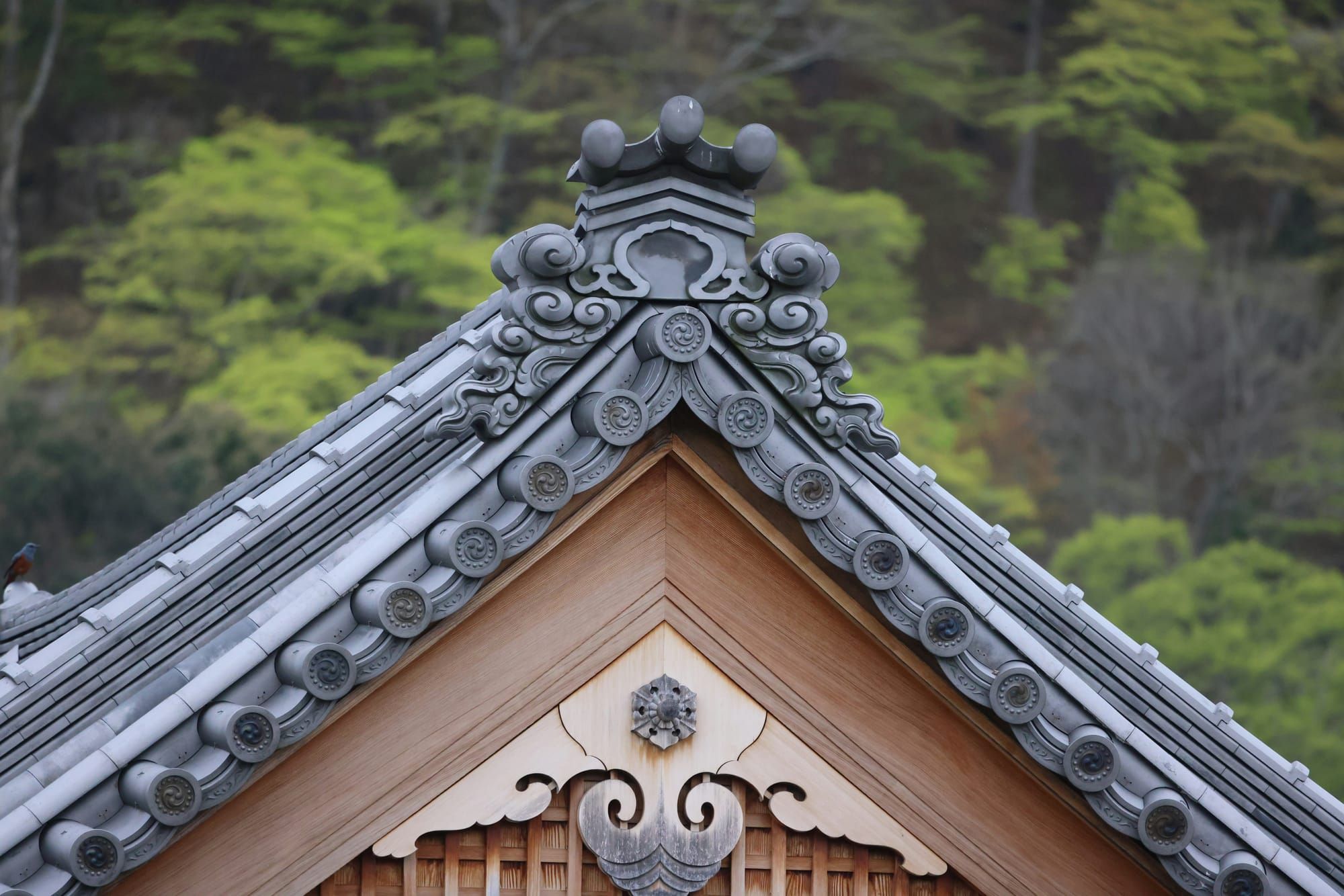
Few elements are as characteristic of traditional Japanese architecture as the tiled roof. From Buddhist temples to Shinto shrines and historic homes, the curves and layered surfaces of kawara (瓦) have shaped the look of Japanese buildings for centuries. But kawara are more than roofing.
Their forms, decorations and symbols reflect Japan's architectural history, religious traditions and craftsmanship.
A 1,400-Year-Old Tradition
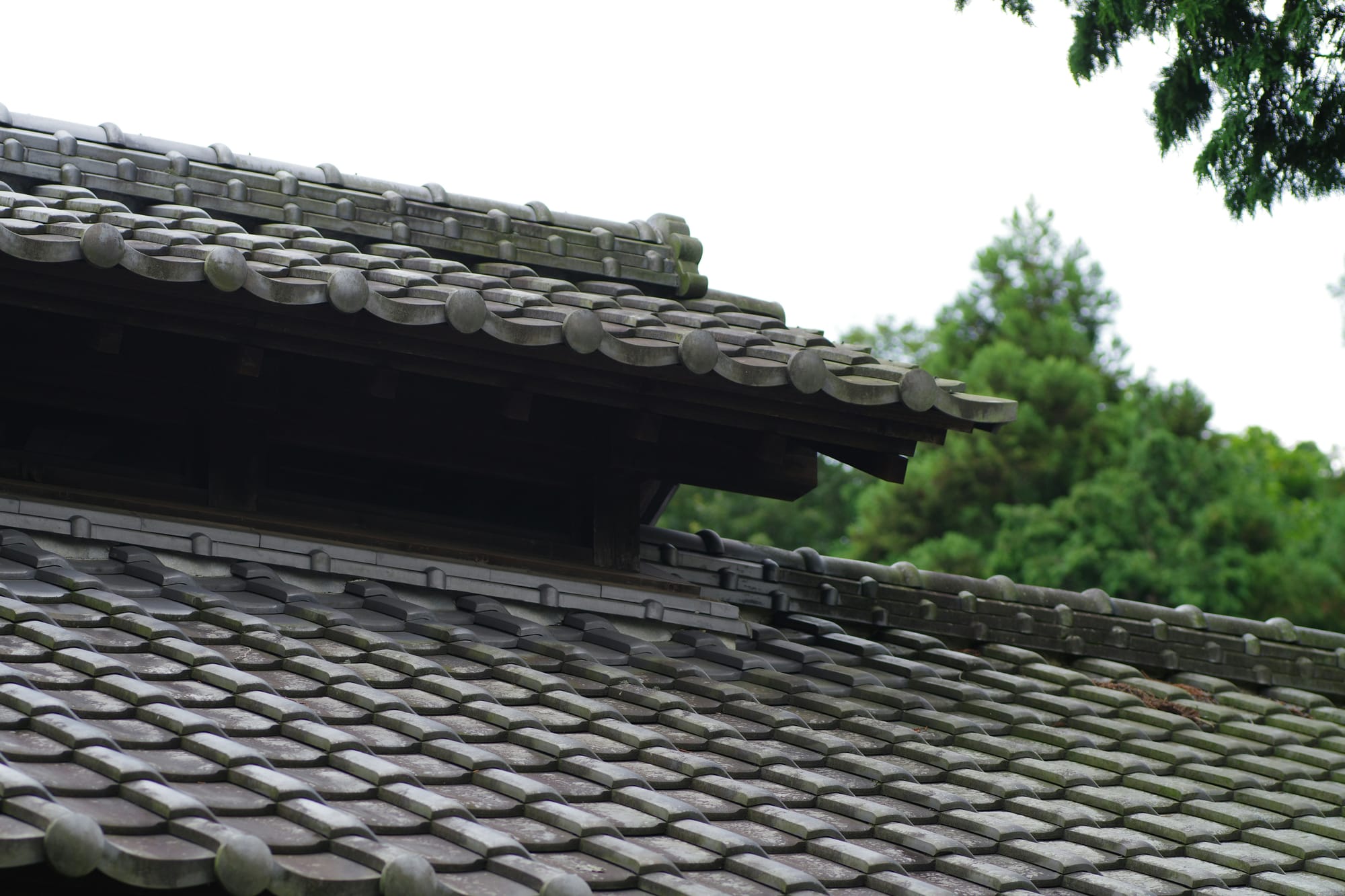
Clay roof tiles reached Japan from the Asian mainland in the sixth century, around the start of the Asuka period (593–710 CE), most likely via the Korean Peninsula and building on earlier Chinese developments. They arrived alongside Buddhism and the temples built for it.
Compared with many earlier roofing materials, clay tiles resisted fire and weather far better. Early temples such as Asukadera and Hōryū-ji in Nara show how quickly tiled roofing became part of Japanese religious architecture, and Hōryū-ji remains one of the country's most important surviving temple complexes.
More Than Just Roofing
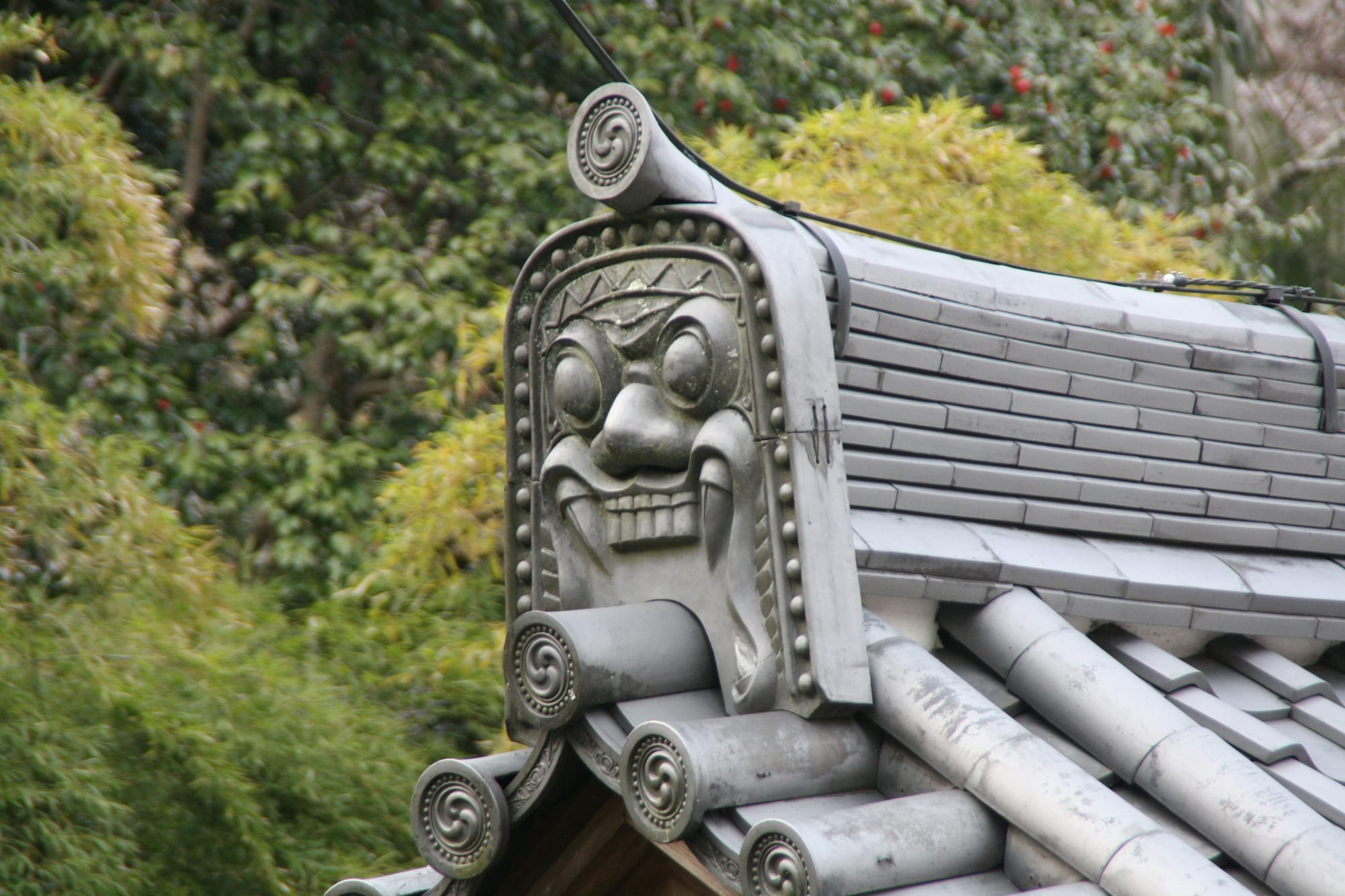
"Kawara" generally means traditional clay roof tiles, but a Japanese roof uses many tile forms, each with its own architectural or decorative role. Among the most recognizable are onigawara (鬼瓦), large tiles placed at the ends of roof ridges.
The name means "demon tiles" or "ogre tiles." They often show fierce horned faces with exaggerated expressions and elaborate three-dimensional detail. They weren't purely decorative: the fearsome face was meant to act as a guardian, protecting the building.
From Floral Ornaments to Demons
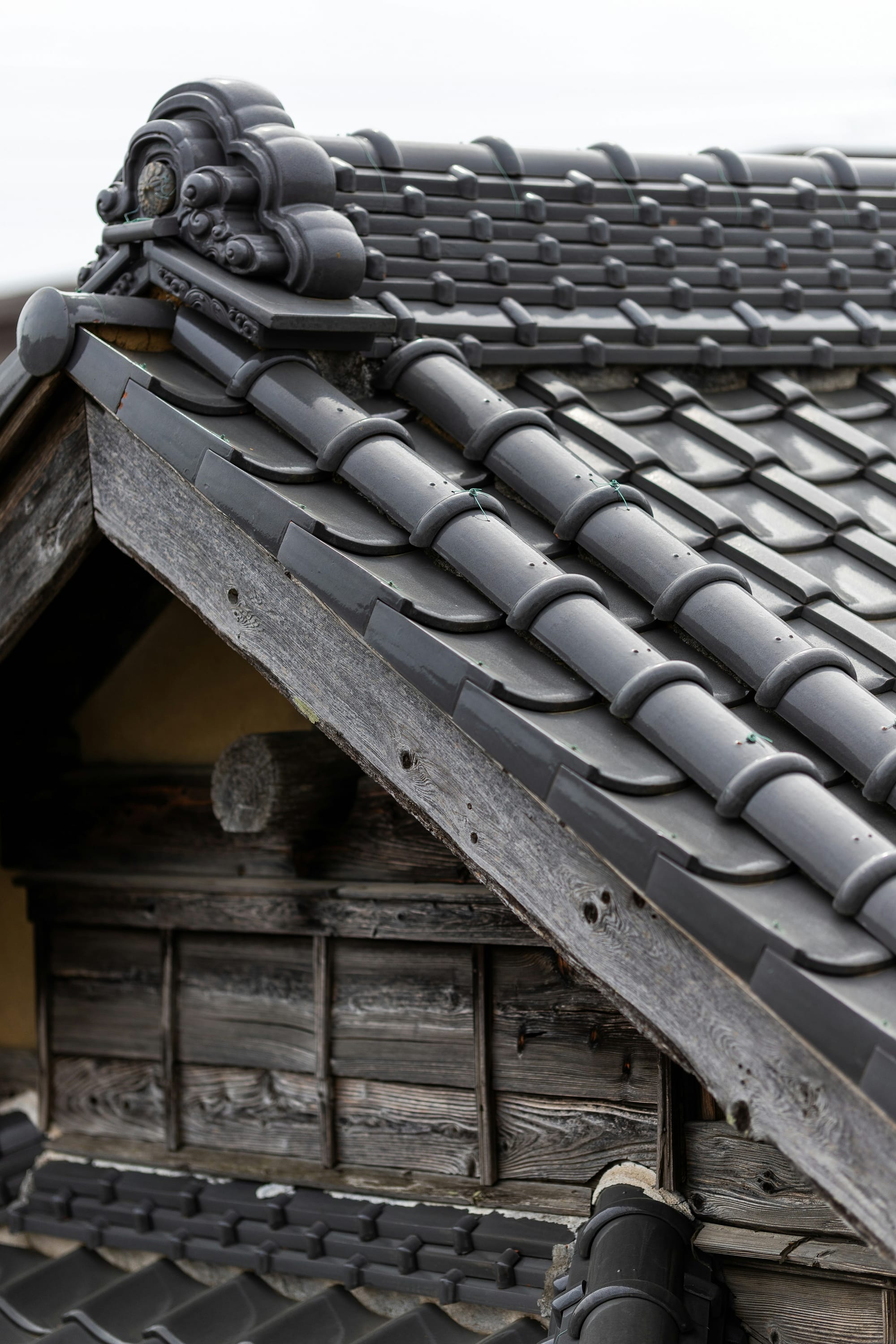
The onigawara developed gradually. Earlier roof-end tiles were typically decorated with floral motifs, especially lotus patterns. A predecessor of the demon-faced tile was the oni-ita, a board decorated with an oni image and fixed at the end of a roof.
Over time, and especially from the Nara period onward, roof-end tiles grew more elaborate, and the protective oni imagery became the three-dimensional demon faces we know today.
It is a good example of a practical building component slowly becoming an artistic and symbolic feature.
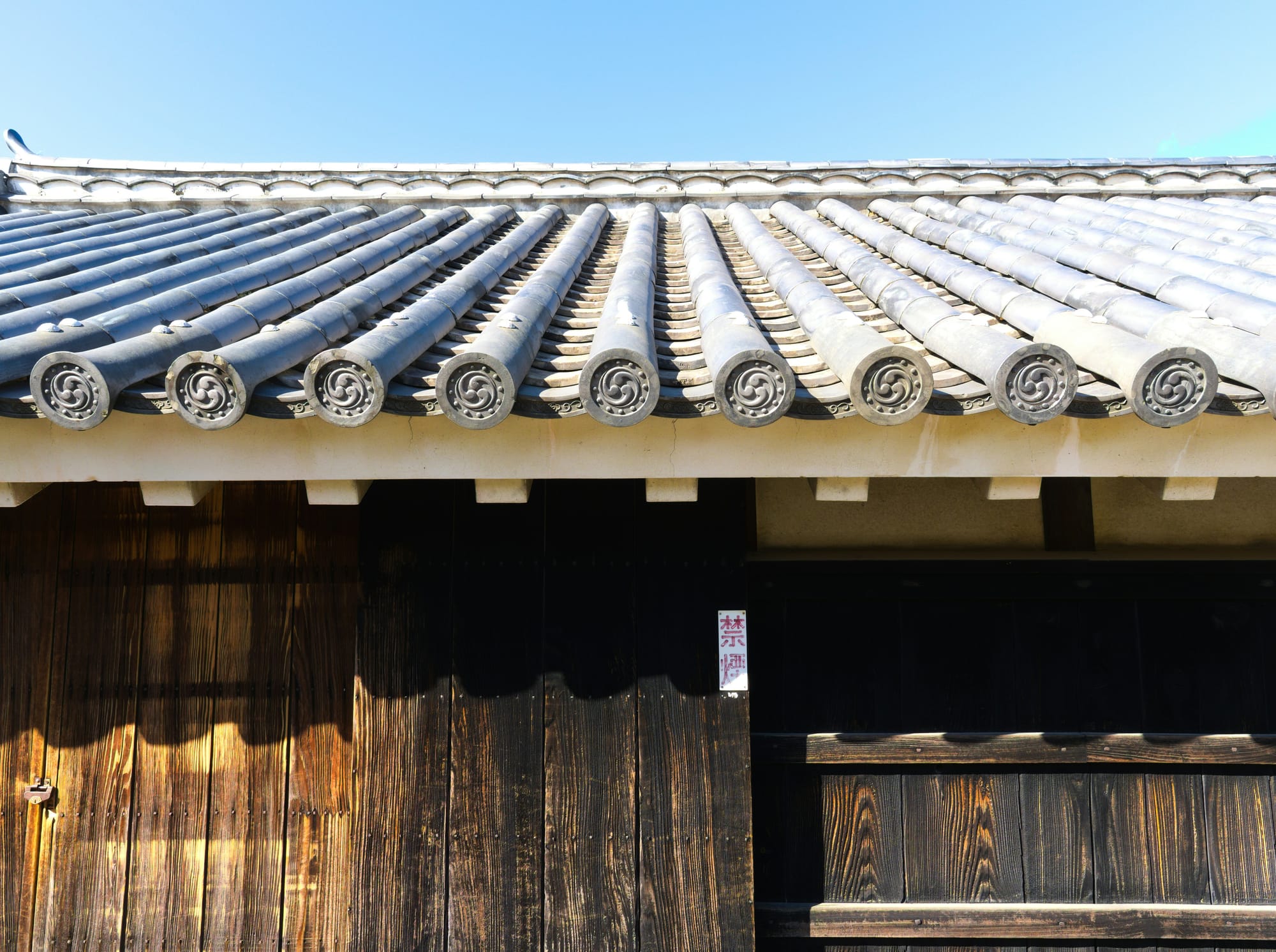
Symbols on Japanese Roof Tiles
Kawara carry a wide range of motifs that express religious, protective, familial or cultural meaning.
Manji (卍): An ancient Buddhist symbol, common on temple architecture. It has been used in Buddhism and other Asian traditions for thousands of years, long before its appropriation by Nazi Germany in the twentieth century.
Tomoe (巴): A swirling, comma-like pattern associated with water, protection and traditional heraldry.
Kamon (家紋): Family crests, which identify the family, institution or lineage tied to a building.
Together, these motifs turn the roof into a visual language.
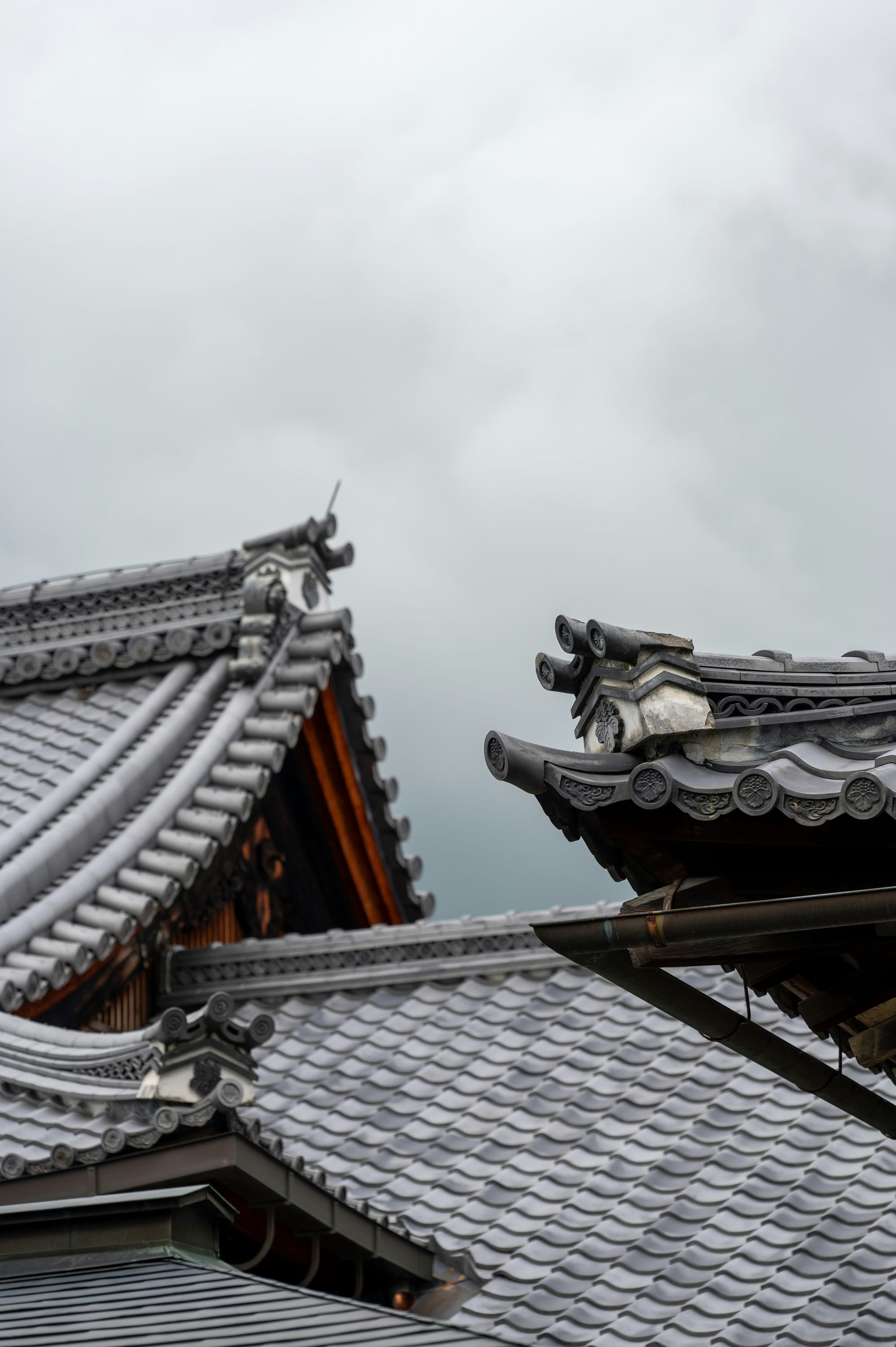
Look Up
Next time you visit a Japanese temple, shrine or traditional building, don't only look at the entrance or the gardens. Look up. Check the ridges, corners and ends, and you may find an onigawara staring back at you: a centuries-old guardian combining craftsmanship, symbolism and practical construction in a single piece of fired clay.
For conservators and architectural historians, these tiles are valuable evidence of how Japanese architecture has combined function, durability, craftsmanship and cultural meaning.
A kawara roof is not simply a roof. It is part of the history of the building.