
Kawase Hasui: The Man Who Mastered the Sunset
Kawase Hasui spent his life chasing the moment when day turns into evening. Discover the shin-hanga master known as the poet of travel, and how his glowing woodblock sunsets were made.

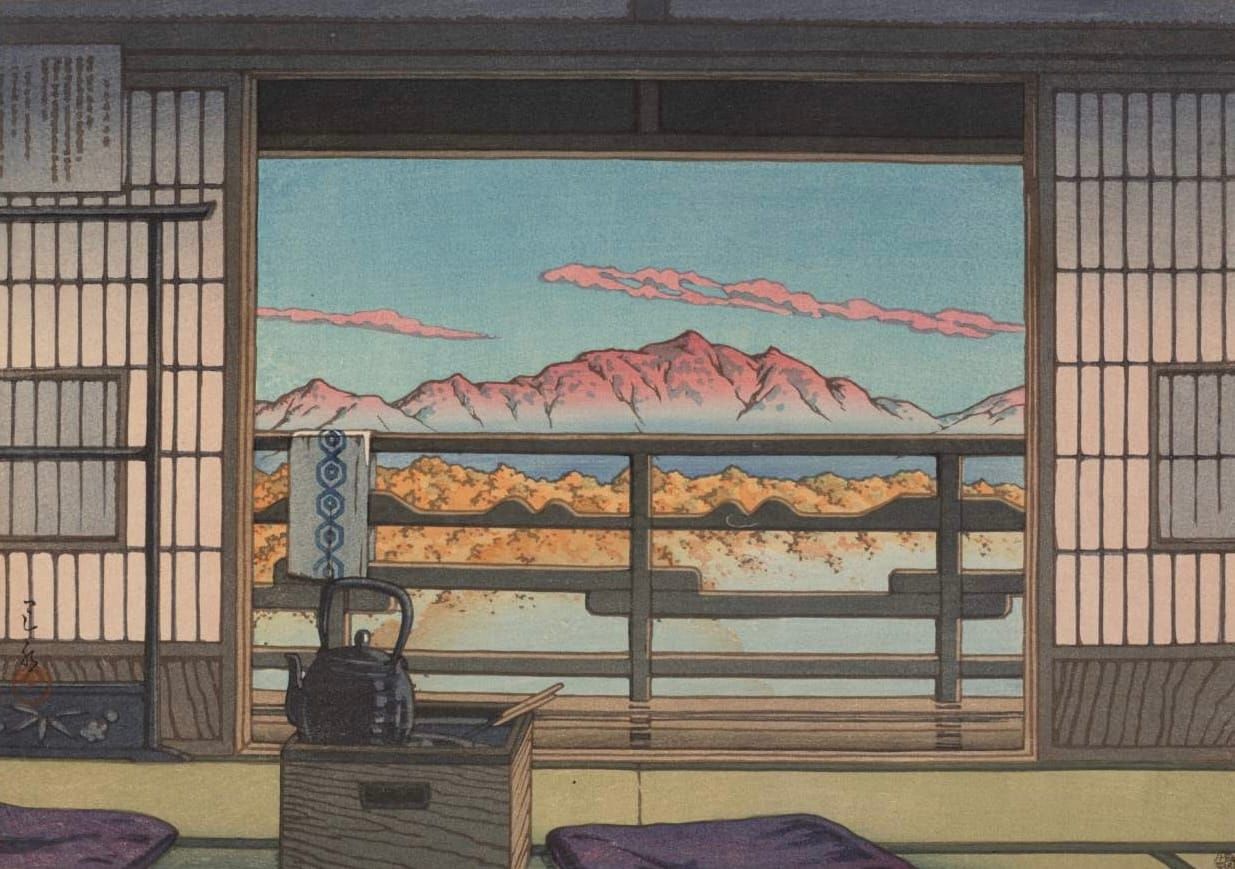
There is a moment at the end of the day when the sky turns orange, the water goes still and the first lights come on in a quiet village. Kawase Hasui spent his whole life chasing that moment. Through hundreds of woodblock prints of glowing skies, snowy temples and moonlit rivers, he became one of the best loved Japanese artists of the 20th century.
Working with the publisher Watanabe Shōzaburō in the shin-hanga movement, Hasui gave new life to the centuries-old craft of Japanese woodblock printing. This is the story of the man who mastered the sunset.
Kawase Hasui at a Glance
- Name: Kawase Hasui (川瀬巴水), born Kawase Bunjirō
- Born: May 18, 1883, Shiba, Tokyo
- Died: November 7, 1957, Tokyo
- Movement: Shin-hanga ("new prints")
- Publisher: Watanabe Shōzaburō
- Teacher: Kaburaki Kiyokata
- Output: More than 600 woodblock print designs
- Nicknames: "The poet of travel" (ryojō shijin), often compared to Hiroshige
- Famous prints: Zōjō-ji Temple in Shiba (1925), Moon at Magome (1930), Dusk at Ushibori (1930)
A Late Start
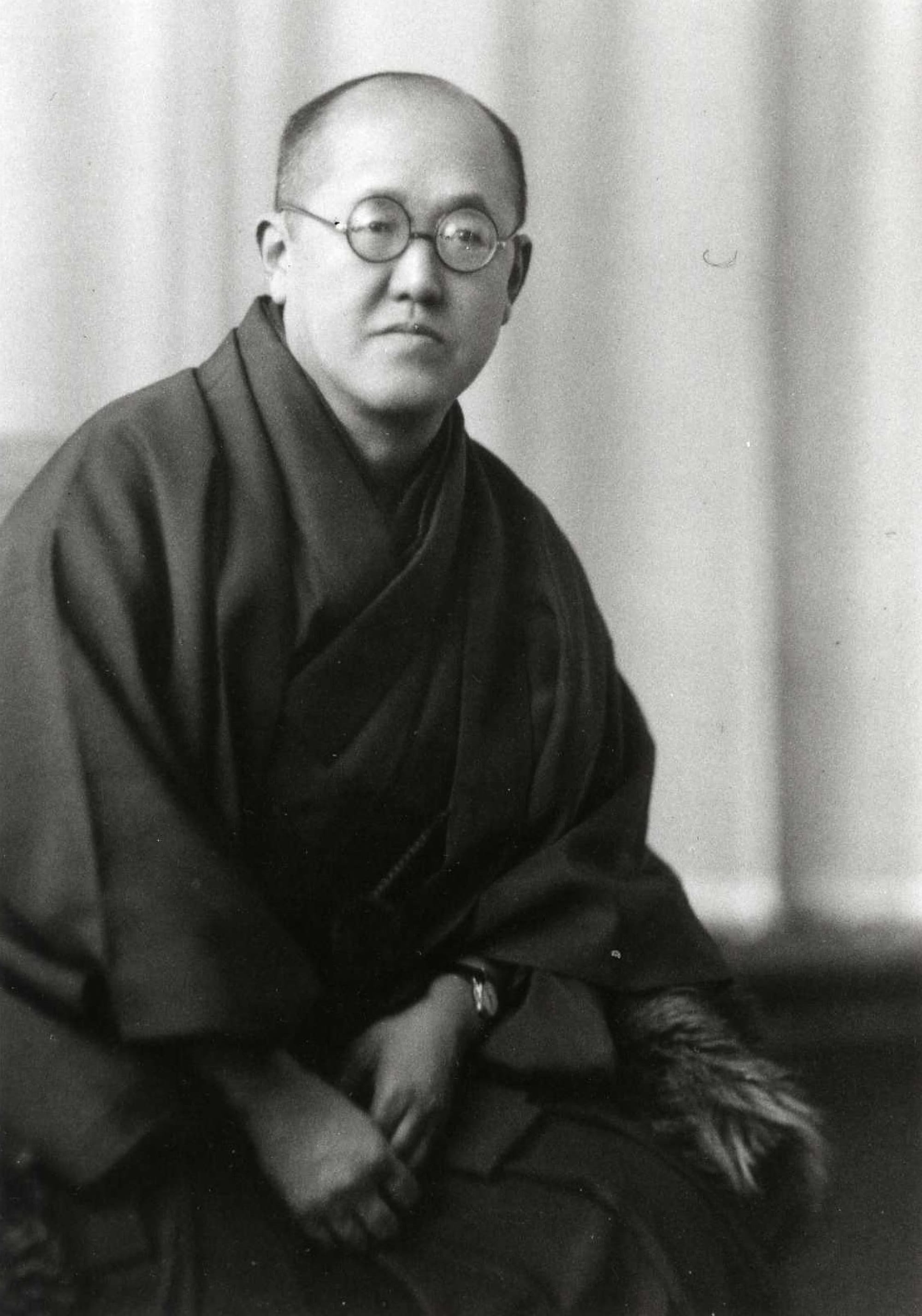
Hasui was born in 1883 in Shiba, in the heart of Tokyo, the eldest son of a family business dealing in braided cords and threads. From a young age he wanted to be a painter, and he took lessons as a boy, but his family expected him to take over the business.
It was only when the family business failed that he was finally free to follow his dream. By then he was already 27. He approached the celebrated nihonga painter Kaburaki Kiyokata, who first advised him to study Western-style painting. After two years with the oil painter Okada Saburōsuke, Hasui returned and was accepted as Kiyokata's student in 1910. Kiyokata gave him the art name Hasui (巴水), the name he would use for the rest of his life.
The Spark: Shin-hanga and Watanabe Shōzaburō
In 1918, Hasui saw an exhibition of Eight Views of Ōmi, a series of landscape prints by his fellow student Itō Shinsui. The prints had been produced by Watanabe Shōzaburō, an ambitious Tokyo publisher. Hasui was so moved that he decided to devote himself to woodblock printing.
That same year, Watanabe published Hasui's first three prints, a set of views of the hot spring town of Shiobara. It was the beginning of a partnership that would last almost forty years, until Hasui's death.
What Is Shin-hanga?
Shin-hanga, meaning "new prints," was a movement launched by Watanabe in the 1910s to revive traditional Japanese woodblock printing. By the early 20th century, ukiyo-e had been overtaken by photography and modern printing. Watanabe believed the old craft could be reborn for a modern audience.
Shin-hanga prints kept the classic subjects of ukiyo-e, such as landscapes, beautiful women and actors, but added a new sense of realism. Artists used Western ideas of light, shadow and perspective, and paid close attention to weather, seasons and the time of day. Many of the prints were sold to collectors in the United States and Europe, where they became extremely popular.
Every Print a Collaboration
Like the ukiyo-e masters before him, Hasui did not carve or print his own blocks. Every shin-hanga print was the work of a team:
- The artist made the sketches and the final design.
- The carver cut the design into a series of cherry wood blocks, one for each part of the color scheme.
- The printer inked the blocks and pressed the paper onto them by hand with a baren, building up the image one layer at a time.
- The publisher, Watanabe, organized the whole process and sold the finished prints.
What made Watanabe's workshop different was that the artist was closely involved in the carving and printing, checking proofs and guiding the craftsmen until the colors were exactly right.
Dozens of Layers for One Sunset
Hasui's glowing skies and soft reflections were only possible because of this painstaking process. Shin-hanga prints typically required twenty to forty separate printings, and some needed even more. Each layer added a new color or a subtle gradation, known as bokashi, where the ink fades gently from dark to light across the sheet. When the government documented the making of Hasui's Snow at Zōjō-ji in 1953, the process was recorded across 42 printings.
That is how a sunset in a Hasui print can shift from deep blue at the top of the sky to warm orange at the horizon, while the water below reflects every tone.
The Poet of Travel
Hasui's greatest source of inspiration was travel. He journeyed across Japan with his sketchbook, from snowy northern villages to quiet coastal towns and mountain lakes, recording what he saw in quick drawings and watercolors. Back in Tokyo, these sketches became the basis for his prints.
Unlike Hiroshige, the great 19th century landscape artist to whom he is often compared, Hasui was not drawn to famous views. He preferred ordinary places: a village road after rain, a boat moored at dusk, a small shrine in the snow. His prints capture the feeling of being somewhere, the stillness, the weather and the light. This is why he became known as the ryojō shijin, "the poet of travel."
His major series include Travel Souvenirs (three series, 1919 to 1929), Twelve Scenes of Tokyo (1919 to 1921), Twenty Views of Tokyo (1925 to 1930) and Eight Views of Korea (1940), made after a trip to the Korean peninsula in 1939.
Loss and Renewal: The 1923 Earthquake
On September 1, 1923, the Great Kantō Earthquake devastated Tokyo. Hasui lost his home and 188 sketchbooks, years of work from his travels. Watanabe's workshop was also destroyed, along with finished woodblocks and prints.
Instead of giving up, Watanabe encouraged Hasui to start again. Hasui set out on a sketching journey through the Hokuriku, San'in and San'yō regions of western Japan. It lasted 102 days, the longest trip of his life. The prints that followed were brighter, bolder and more confident than anything he had made before.
Masters of Light: Sunsets, Snow and Moonlight
Hasui was fascinated by transitional moments: dusk, twilight, night, rain and falling snow. These are the times when the world looks most atmospheric, and they gave him the chance to show off the delicate color gradations of shin-hanga.
Zōjō-ji Temple in Shiba (1925)
Hasui's most famous print shows the red gate of Zōjō-ji temple in Tokyo under falling snow, with a lone woman walking past beneath an umbrella. It was his best-selling design.
Moon at Magome (1930)
Three tall pine trees stand against a pale evening sky as a full moon rises behind them over the fields of Magome, then a quiet suburb of Tokyo where Hasui lived. It was his second best-selling print.
Dusk at Ushibori (1930)
A sailing boat drifts on the calm water of Ushibori under a sky glowing with the last light of day. It is one of the finest examples of Hasui's love for the sunset hour.
The "Living National Treasure" Story
You will often read that Hasui was named a Living National Treasure in 1956. The real story is a little different, and more interesting.
In the early 1950s, the Japanese government's cultural heritage authorities wanted to honor traditional woodblock printing. But because every shin-hanga print was the work of an artist, carver and printer together, there were objections to singling out one person for recognition. Instead, the government commissioned Hasui to create a new print and had its entire production carefully documented as a record of the craft. The result was Snow at Zōjō-ji (1953), a return to the temple gate of his most famous design, now with modern streetcar wires and people in Western dress.
In this way, Hasui's work itself became a record of Japan's intangible cultural heritage, a fitting honor for an artist who always saw printmaking as a shared craft.
Final Years and Legacy
Hasui kept traveling and working into his seventies. His last completed Tokyo scene was Snow at Ikegami Honmonji (1956). His final design, Konjiki-dō at Hiraizumi, showing the famous golden hall in the snow, was completed after his death on November 7, 1957.
In his lifetime, Hasui created more than 600 print designs. Today his work is held by museums around the world, and his prints remain among the most collected of all Japanese woodblock prints. One of his most famous admirers was Steve Jobs, who discovered shin-hanga as a teenager at a friend's home in California. Jobs went on to build his own collection of shin-hanga prints, and Hasui was by far his favorite artist.
Nearly seventy years after his death, Hasui's sunsets still feel like a warm memory you never quite want to end.
Where to See Kawase Hasui's Prints
Hasui's prints appear in many major collections, including the Tokyo National Museum, the British Museum, the Honolulu Museum of Art and numerous American museums. In Japan, exhibitions of his work are held regularly, and the Ōta City Folk Museum in Tokyo, close to the Magome and Ikegami areas where he lived, has a special connection to his life and work.
Because works on paper are sensitive to light, prints are usually shown in rotating exhibitions. Check the museum's schedule before your visit.
Frequently Asked Questions
Who was Kawase Hasui?
Kawase Hasui (1883 to 1957) was a Japanese woodblock print artist and one of the leading figures of the shin-hanga movement. He is famous for his atmospheric landscapes of Japan, especially scenes at sunset, at night and in the snow.
What is shin-hanga?
Shin-hanga, meaning "new prints," was an early 20th century movement that revived traditional Japanese woodblock printing. Led by publisher Watanabe Shōzaburō, it combined the collaborative ukiyo-e method of artist, carver and printer with a more realistic approach to light, weather and perspective.
Why is Kawase Hasui called the poet of travel?
Hasui traveled all over Japan to sketch quiet, everyday places, and his prints capture the atmosphere and emotion of being there. This earned him the nickname ryojō shijin, "the poet of travel."
What is Kawase Hasui's most famous print?
His most famous and best-selling print is Zōjō-ji Temple in Shiba (1925), showing the temple's red gate in the snow. Moon at Magome (1930) is his second best-selling design.
Was Kawase Hasui a Living National Treasure?
He is often described as one, but the full story is more nuanced. Because shin-hanga was a collaborative craft, the government chose not to honor a single artist and instead commissioned Hasui's print Snow at Zōjō-ji (1953) as a documented record of traditional woodblock techniques.
How many colors are in a Hasui print?
Shin-hanga prints typically needed twenty to forty or more separate printings. The documented production of Snow at Zōjō-ji was recorded across 42 printings.
Love the quiet beauty of Japanese prints? Follow @jpnstudio2023 on Instagram for daily discoveries from the world of Japanese art, history and culture.