Best Museums in Tokyo: The Ultimate 2026 Guide for Art and Culture Lovers
The Tokyo National Museum is the best museum in Tokyo for most visitors. Here are 20 museums worth your time, from ukiyo-e and samurai swords to Ghibli and teamLab.


Tokyo is one of the great museum cities of the world, but it is easy to spend a precious travel day in the wrong one. Many of the city's finest treasures sit in quiet private museums that most travel guides skip. This guide shows you which Tokyo museums are worth your time, what to see inside and how to plan your visit.
Updated September 2026 with current prices, closed days and ticket rules.
Quick Answer: The Best Museums in Tokyo
The Tokyo National Museum in Ueno is the best museum in Tokyo for most visitors. Founded in 1872, it is Japan's oldest museum, with around 120,000 objects from samurai armor to ukiyo-e prints, including 89 National Treasures.
The best Tokyo museum for every type of visitor:
- Best overall: Tokyo National Museum (Ueno)
- Best for Japanese art lovers: Nezu Museum (Aoyama)
- Best for ukiyo-e and Hokusai: Sumida Hokusai Museum (Ryogoku)
- Best for Tokyo history: Edo-Tokyo Museum (Ryogoku), reopened in March 2026
- Best for crafts and design: Japan Folk Crafts Museum (Komaba)
- Best for contemporary art: Mori Art Museum (Roppongi)
- Best immersive experience: teamLab Planets (Toyosu)
- Best for anime fans: Ghibli Museum (Mitaka)
Short on time? Combine the Tokyo National Museum, the Nezu Museum and the Sumida Hokusai Museum. In two days they take you from ancient Buddhist sculpture to the woodblock prints of the Edo period.
How We Chose These Museums
JPNStudio covers Japanese art, culture and history for close to a million followers on Instagram and Facebook. We judged every museum on four things: the strength of its collection, how uniquely Japanese the experience is, how easy it is for international visitors and how much you get for your time.
Tokyo Museums at a Glance
Most Tokyo museums close on Mondays. When a Monday is a public holiday, they usually open and close on the next weekday instead. Prices are for adults, checked in September 2026; special exhibitions often cost extra.
| Museum | Area | Best for | Closed | Adult admission |
|---|---|---|---|---|
| Tokyo National Museum | Ueno | Japanese art, samurai, ukiyo-e | Mondays | ¥1,000 |
| Nezu Museum | Aoyama | Premodern masterpieces and a garden | Mondays | ¥1,400 online |
| Sumida Hokusai Museum | Ryogoku | Hokusai | Mondays | ¥400 |
| Ota Memorial Museum of Art | Harajuku | Ukiyo-e prints | Mondays, end of month | ¥1,000 to ¥1,200 |
| Edo-Tokyo Museum | Ryogoku | Tokyo history | Mondays | ¥800 |
| Suntory Museum of Art | Roppongi | Lacquer, ceramics, screens | Tuesdays | Varies |
| Mitsui Memorial Museum | Nihonbashi | Tea objects, Okyo's screens | Mondays | ¥1,200 to ¥1,800 |
| Seikado Bunko Art Museum | Marunouchi | Tea bowls, National Treasures | Mondays | About ¥1,500 |
| Okura Museum of Art | Toranomon | Buddhist art, historic building | Mondays | About ¥1,000 |
| MOMAT | Takebashi | Modern Japanese art | Mondays | ¥500 |
| Yamatane Museum of Art | Hiroo | Nihonga painting | Mondays | About ¥1,400 |
| Mori Art Museum | Roppongi | Contemporary art, late hours | Between exhibitions | Varies |
| Yayoi Kusama Museum | Shinjuku | Yayoi Kusama | Mondays to Wednesdays | ¥1,100, online only |
| teamLab Planets | Toyosu | Immersive digital art | Check calendar | From ¥3,600 |
| teamLab Borderless | Azabudai Hills | Immersive digital art | Some Tuesdays | From about ¥3,800 |
| Ghibli Museum | Mitaka | Studio Ghibli | Tuesdays | ¥1,000, advance only |
| Tokiwaso Manga Museum | Toshima | Manga history | Mondays | Free |
| Japan Folk Crafts Museum | Komaba | Mingei crafts | Mondays | ¥1,200 to ¥1,500 |
| Edo-Tokyo Open Air Architectural Museum | Koganei | Historic buildings | Mondays | ¥400 |
| Japanese Sword Museum | Ryogoku | Samurai swords | Mondays | ¥1,000 |
The Essential Tokyo Museums
These five museums form the core of any art and culture trip to Tokyo. If you only have a few days, start here.
1. Tokyo National Museum (東京国立博物館), Ueno
Best for: first-time visitors and anyone who wants the full sweep of Japanese art in one place.
The Tokyo National Museum (TNM) is Japan's oldest museum, founded in 1872. It holds around 120,000 objects, including 89 National Treasures. Only about 3,000 are on view at once, and displays rotate every four to eight weeks, so no two visits are the same.
Start on the second floor of the Honkan (Japanese Gallery), where ten rooms trace Japanese art in chronological order. Then walk to the Gallery of Horyuji Treasures, a calm modern building by architect Yoshio Taniguchi that holds more than 300 treasures from one of Japan's oldest temples.
Don't miss:
- The rooms of samurai armor, swords and lacquer in the Honkan
- The ukiyo-e room (Room 10), which changes its prints every few weeks
- Kuroda Memorial Hall, free to enter, with paintings by Kuroda Seiki, the pioneer of Western-style painting in Japan
On now: a major Utagawa Hiroshige exhibition (Japanese title 歌川広重 江戸のベストアングル, "Edo's Best Angles") runs from 29 September to 20 December 2026. It is TNM's first full-scale Hiroshige show and celebrates a gift of 1,025 prints from collector Uchiyama Susumu. His three great series appear in turn: The Fifty-three Stations of the Tokaido (until 25 October), The Sixty-nine Stations of the Kisokaido (27 October to 23 November) and One Hundred Famous Views of Edo (25 November to 20 December). Tickets cost ¥1,500 and include same-day entry to the permanent collection.
JPNStudio tip: Buy your ticket online, because the queue at the ticket window can pass 30 minutes on busy days. Since August 2026 suitcases are not allowed inside, and all bags go through a security check at the main gate. Several Honkan rooms close for upgrades between late October 2026 and late April 2027, including the National Treasure room (Room 2) from 14 December.
Know before you go:
- Where: Ueno Park, 10 minutes' walk from JR Ueno Station (Park Exit)
- Hours: 9:30 to 17:00; Fridays and Saturdays until 20:00
- Closed: Mondays (open on holiday Mondays, then closed the next weekday)
- Admission: ¥1,000 adults, ¥500 university students, free for under 18s and over 70s; special exhibitions cost extra
- Time needed: at least 3 hours
- Website: tnm.jp
2. Nezu Museum (根津美術館), Aoyama
Best for: Japanese art lovers who want masterpieces, quiet galleries and a garden.
Industrialist and tea practitioner Nezu Kaichiro built this collection of more than 7,400 works of premodern Japanese and East Asian art. The building by Kengo Kuma opens onto a hillside garden with teahouses, stone lanterns and a pond. It is one of the most peaceful places in central Tokyo, a few minutes from the boutiques of Omotesando.
Don't miss:
- Ogata Korin's Irises (燕子花図), a National Treasure pair of gold folding screens, shown each spring when the real irises bloom in the garden (in 2026: 11 April to 10 May)
- The long bamboo-lined entrance path
- The garden and NEZUCAFÉ, which are open only to ticket holders
JPNStudio tip: Book a timed ticket online. It saves you ¥200 compared with buying at the door.
Know before you go:
- Where: 8 minutes' walk from Omotesando Station (Exit A5)
- Hours: 10:00 to 17:00 (last entry 16:30)
- Closed: Mondays, between exhibitions and over New Year
- Admission: collection shows ¥1,400 online or ¥1,600 at the door; special exhibitions from ¥1,600 online
- Time needed: 1.5 to 2 hours
- Website: nezu-muse.or.jp
3. Sumida Hokusai Museum (すみだ北斎美術館), Ryogoku
Best for: Hokusai fans and first-timers curious about ukiyo-e.
Katsushika Hokusai was born in Sumida and spent most of his roughly 90 years here. This striking aluminum-clad museum by Pritzker Prize winner Kazuyo Sejima opened in 2016, close to where he lived and worked.
The permanent gallery tells Hokusai's life story through full-size, high-definition replicas of his best-known prints, including The Great Wave off Kanagawa. Original prints and paintings appear in the special exhibitions on the upper floors, because light damages them.
Don't miss:
- The life-size recreation of Hokusai's studio in the permanent gallery
- The touch-screen displays, which make his techniques easy to understand
- The 10th-anniversary special exhibition of the museum's finest works, including Hokusai's Sumida River scroll (15 September to 23 November 2026)
JPNStudio tip: Keep your ticket stub. It gets you a discount at the Edo-Tokyo Museum, a short walk away.
Know before you go:
- Where: 5 minutes' walk from Ryogoku Station (Toei Oedo Line, Exit A3); 9 minutes from JR Ryogoku Station
- Hours: 9:30 to 17:30 (last entry 17:00)
- Closed: Mondays (or the next weekday after a holiday Monday) and 29 December to 1 January
- Admission: ¥400 for the permanent gallery; special exhibitions from about ¥1,000
- Time needed: 1 to 1.5 hours
- Website: hokusai-museum.jp
4. Ota Memorial Museum of Art (太田記念美術館), Harajuku
Best for: serious ukiyo-e lovers.
Hidden on a quiet lane just off Omotesando, this small museum holds one of the world's great ukiyo-e collections, about 15,000 prints and paintings. Businessman Ota Seizo V started collecting when he saw Japan's woodblock prints leaving for Western museums. Exhibitions change almost every month, each built around a clear theme, so there is always something new to see.
Don't miss:
- Hand-painted ukiyo-e (nikuhitsu-ga), which are far rarer than prints
- The small stone garden inside the museum
- The basement shop, a favorite for print-inspired tenugui and postcards
JPNStudio tip: You swap your shoes for slippers at the entrance, like in a traditional inn. The museum also closes for a few days at the end of each month to change exhibitions, so check the calendar before you go.
Know before you go:
- Where: 1 minute from Meiji-Jingumae Station (Exit 5); 3 minutes from JR Harajuku Station
- Hours: 10:30 to 17:30
- Closed: Mondays and between exhibitions
- Admission: ¥1,000 to ¥1,200, depending on the exhibition
- Time needed: 45 to 60 minutes
- Website: ukiyoe-ota-muse.jp
5. Edo-Tokyo Museum (江戸東京博物館), Ryogoku
Best for: history lovers, families and anyone curious how Edo became Tokyo.
After a four-year renovation, the Edo-Tokyo Museum reopened on 31 March 2026. Its permanent exhibition covers about 9,000 square meters over two floors. It tells the story of the city through full-size reconstructions, detailed scale models and hands-on displays.
Don't miss:
- The full-scale facade of the Nakamura-za kabuki theater
- The huge diorama of Ryogoku Bridge in the 1840s, with around 1,500 tiny figures
- The full-scale reproduction of the Hattori Watch Shop, an icon of Meiji-era Ginza
On now: the special exhibition Toyotomi Brothers! (15 September to 8 November 2026), linked to NHK's 2026 historical drama. A major Maruyama Okyo exhibition is planned for this winter.
JPNStudio tip: Pair it with the Sumida Hokusai Museum and the Japanese Sword Museum, all in Ryogoku. Captions are in Japanese and English, and the museum stays open until 19:30 on Saturdays.
Know before you go:
- Where: a few minutes' walk from Ryogoku Station (JR and Toei Oedo lines)
- Hours: 9:30 to 17:30; Saturdays until 19:30
- Closed: Mondays (or the next day after a holiday Monday) and over New Year
- Admission: ¥800 for the permanent exhibition; special exhibitions extra
- Time needed: 2 to 3 hours
- Website: edo-tokyo-museum.or.jp
Classical Japanese Art and Tea Culture
Some of Japan's greatest treasures belong to private museums founded by industrial families such as the Mitsui and the Iwasaki of Mitsubishi. Most have no permanent display. They build themed exhibitions from their collections instead, so always check what is on before you go.
JPNStudio tip: Many exhibitions are split into two terms, with works swapped halfway through. If you want to see one specific piece, look for its display dates (展示期間) on the museum's exhibition list.
Suntory Museum of Art (サントリー美術館), Roppongi
Best for: Japanese decorative arts, from lacquer and ceramics to glass and painted screens.
Founded in 1961 around the idea of "art in life", the museum moved to Tokyo Midtown in 2007. Kengo Kuma designed its calm galleries to feel like an urban living room, and there is a tea room on site. Exhibitions change five or six times a year.
Because it closes on Tuesdays instead of Mondays, Suntory is one of the few top Japanese art museums you can visit on a Monday.
- Where: Tokyo Midtown Galleria 3F, directly connected to Roppongi Station (Exit 8)
- Hours: 10:00 to 18:00; Fridays until 20:00
- Closed: Tuesdays, between exhibitions and over New Year
- Admission: varies by exhibition; free for junior high school students and younger
- Website: suntory.com/sma
Mitsui Memorial Museum (三井記念美術館), Nihonbashi
Best for: tea ceremony objects, Noh masks and one famous New Year screen.
The Mitsui merchant family collected art for more than three centuries. Their museum sits on the seventh floor of the Mitsui Main Building (1929), which is itself an Important Cultural Property. The collection of about 4,000 works includes six National Treasures.
Don't miss: Maruyama Okyo's Pine Trees in Snow (雪松図), a National Treasure pair of screens painted for the Mitsui family. By tradition, the museum shows it around New Year.
- Where: 3 minutes from Mitsukoshimae Station (Exit A7); 7 minutes from JR Tokyo Station
- Hours: 10:00 to 17:00
- Closed: Mondays and between exhibitions
- Admission: varies by exhibition, usually ¥1,200 to ¥1,800
- Website: mitsui-museum.jp
Seikado Bunko Art Museum (静嘉堂文庫美術館), Marunouchi
Best for: the most famous tea bowl in the world.
The Seikado collection was built by two presidents of Mitsubishi and holds about 6,500 artworks, including seven National Treasures. Since 2022 it has been shown in the grand Meiji Seimeikan building (1934), a short walk from Tokyo Station.
Don't miss: the Yohen Tenmoku tea bowl known as "Inaba Tenmoku", made in China in the 12th or 13th century. Its glaze glitters like a galaxy, and only three bowls of this kind survive, all in Japan. It is shown only in certain exhibitions, so check the schedule.
- Where: directly connected to Nijubashimae Station (Exit 3); 5 minutes from JR Tokyo Station
- Hours: 10:00 to 17:00; Fridays until 18:00
- Closed: Mondays and between exhibitions
- Admission: around ¥1,500
- Website: seikado.or.jp
Okura Museum of Art (大倉集古館), Toranomon
Best for: Buddhist art, calligraphy and a historic building next to a legendary hotel.
Industrialist Okura Kihachiro opened Japan's first private museum in 1917, to stop Japanese art from leaving the country. Today's building by architect Ito Chuta dates from 1927 and reopened in 2019 in the grounds of The Okura Tokyo. The collection of about 2,500 works includes three National Treasures.
- Where: 7 minutes from Roppongi-itchome Station (Exit 3)
- Hours: 10:00 to 17:00
- Closed: Mondays and between exhibitions
- Admission: around ¥1,000; free for guests of The Okura Tokyo
- Website: shukokan.org
Temporarily closed: the Idemitsu Museum of Arts, known for Japanese painting and ceramics, has been closed since December 2024 while its building is rebuilt. It will reopen in the same place, but no date has been announced.
Modern and Contemporary Art
Japanese art did not stop in the Edo period. These museums cover Nihonga (modern Japanese-style painting), Japan's encounter with Western art and today's most famous Japanese artists.
National Museum of Modern Art, Tokyo (東京国立近代美術館, MOMAT), Takebashi
Best for: the story of Japanese art from the 1900s to today, at a bargain price.
Opened in 1952 as Japan's first national art museum, MOMAT holds more than 13,000 works, including 18 Important Cultural Properties. Around 200 of them hang at any time across twelve themed rooms, from the fourth floor down to the second.
Don't miss:
- Kishida Ryusei's Road Cut through a Hill (1915), an Important Cultural Property and one of the most loved paintings in modern Japanese art
- Harada Naojiro's Kannon Bodhisattva Riding the Dragon (1890), when it is on view
- "A Room With a View", the top-floor lounge that looks out over the Imperial Palace moat
JPNStudio tip: On Friday and Saturday evenings the collection ticket drops to ¥300 after 17:00. Combine it with a walk around the Imperial Palace gardens next door.
- Where: 3 minutes from Takebashi Station (Tozai Line, Exit 1b)
- Hours: 10:00 to 17:00; Fridays and Saturdays until 20:00
- Closed: Mondays
- Admission: ¥500 adults for the collection; free for under 18s and over 65s; special exhibitions extra
- Website: momat.go.jp
Yamatane Museum of Art (山種美術館), Hiroo
Best for: Nihonga, the glowing mineral-pigment painting style of modern Japan.
Opened in 1966 as Japan's first museum devoted to Nihonga, Yamatane holds more than 1,800 works. Its star is Hayami Gyoshu, and its treasure is his Dancing in the Flames (炎舞, 1925), an Important Cultural Property in which moths circle a burning fire. Gyoshu's golden screen Camellia Petals Scattering is also an Important Cultural Property.
JPNStudio tip: Come in kimono. Many Yamatane exhibitions give ¥200 off for visitors wearing one.
- Where: 10 minutes' walk from Ebisu Station
- Hours: 10:00 to 17:00
- Closed: Mondays and between exhibitions
- Admission: around ¥1,400, depending on the exhibition
- Website: yamatane-museum.jp
Mori Art Museum (森美術館), Roppongi
Best for: big international contemporary art shows with a skyline view.
The Mori Art Museum sits on the 53rd floor of Roppongi Hills Mori Tower. It stays open until 22:00 on most days, which is rare in Tokyo and perfect after dinner. It has no permanent display and closes between exhibitions.
Coming up: Mariko Mori: All That Shines (31 October 2026 to 28 March 2027), the artist's first major retrospective in Japan since 2002, with about 40 works. Opening night coincides with Roppongi Art Night, when the museum stays open until 6:00 the next morning.
- Where: Roppongi Hills, directly connected to Roppongi Station (Hibiya Line, Exit 1c)
- Hours: 10:00 to 22:00; Tuesdays until 17:00
- Closed: between exhibitions
- Admission: varies by exhibition and date, roughly ¥1,700 to ¥3,000 for the Mariko Mori show
- Website: mori.art.museum
Yayoi Kusama Museum (草間彌生美術館), Shinjuku
Best for: fans of Japan's most famous living artist.
Opened in 2017 by the artist's own foundation, this slim white tower in a quiet corner of Shinjuku holds two exhibitions a year across five floors. Shows often include Infinity Net paintings and small mirror rooms, and the open-air top floor usually features one of her pumpkins.
JPNStudio tip: Tickets are sold online only, in timed slots, and never at the door. Sales open at 10:00 Japan time on the 1st of each month for the month after next, and each 90-minute slot has a small capacity.
- Where: 6 minutes from Ushigome-yanagicho Station (Toei Oedo Line, East Exit); 7 minutes from Waseda Station (Tozai Line, Exit 1)
- Hours: 11:00 to 17:30
- Open: Thursdays to Sundays and national holidays only
- Admission: ¥1,100 adults, advance online booking only
- Website: yayoikusamamuseum.jp
Also worth your time
- Artizon Museum, Kyobashi: the former Bridgestone Museum of Art, near Tokyo Station, with Impressionist masterpieces beside modern Japanese painting. Closed Mondays.
- Museum of Contemporary Art Tokyo (MOT), Kiyosumi-Shirakawa: Tokyo's main public museum of contemporary art, in a leafy neighborhood known for its coffee shops. Closed Mondays.
- The National Art Center, Tokyo (NACT), Roppongi: a huge wave-shaped glass building by Kisho Kurokawa with no permanent collection, only big temporary shows. Closed Tuesdays.
teamLab Planets vs teamLab Borderless: Which Should You Visit?
Tokyo has two teamLab digital art museums, and most visitors only need one. Choose teamLab Planets for the famous barefoot, walk-through-water experience. Choose teamLab Borderless if you prefer a bigger maze of rooms to explore at your own pace.
| teamLab Planets | teamLab Borderless | |
|---|---|---|
| Where | Toyosu, a short walk from Shin-Toyosu Station | Azabudai Hills, connected to Kamiyacho Station |
| Experience | Barefoot, wading through knee-deep water on a set route | Shoes on, a "museum without a map" |
| Signature works | Floating Flower Garden, with over 13,000 live orchids | Sketch Ocean, Bubble Universe, EN TEA HOUSE |
| Time needed | 1.5 to 2 hours | 2 to 3 hours |
| Adult ticket | from ¥3,600 (price varies by date) | from about ¥3,800 (price varies by date) |
| Open until | end of 2027 | permanent (opened here in February 2024) |
There is also a Japanese thread running through teamLab's work. The collective calls its approach "ultrasubjective space": a way of flattening space inspired by premodern Japanese and East Asian painting, so the artwork feels continuous with the room you are standing in.
JPNStudio tips:
- Book online before you travel. Tickets are timed, but once inside you can stay as long as you like. At Borderless, tickets bought on site cost ¥200 more.
- At Planets, wear shorts or trousers you can roll above the knee. Skip skirts, because several rooms have mirrored floors; shorts are available to borrow.
- Arrive at opening time or in the last hours of the day for the calmest rooms.
- Websites: teamLab Planets and teamLab Borderless
Anime and Manga Museums in Tokyo
Anime and manga are among Japan's great modern art forms, and Tokyo is where much of their history was made. These two museums are the ones worth crossing the city for.
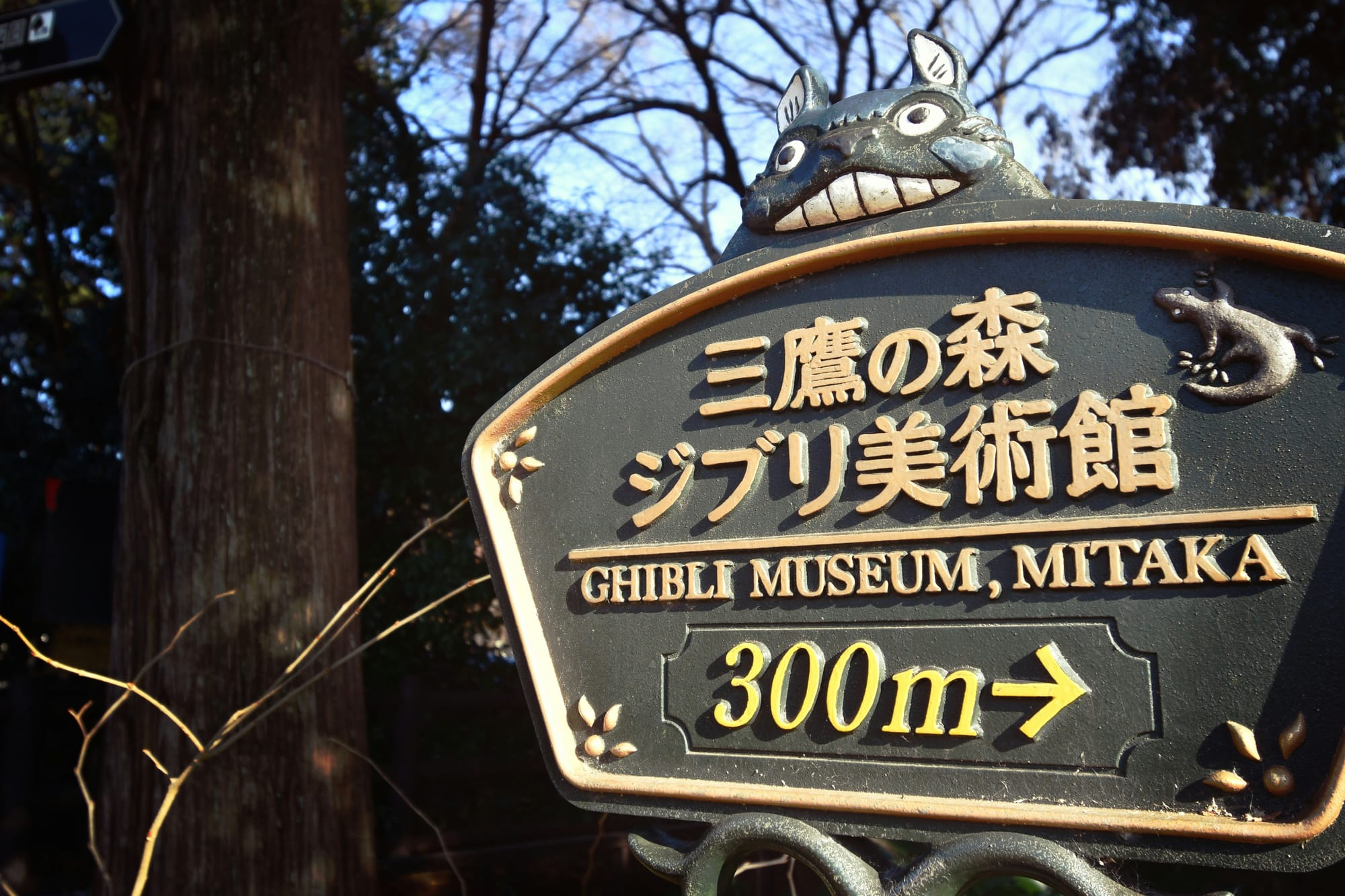
Ghibli Museum (三鷹の森ジブリ美術館), Mitaka
Best for: Studio Ghibli fans of every age.
Designed by Hayao Miyazaki himself, the Ghibli Museum sits at the edge of Inokashira Park in west Tokyo. There is no set route and few explanations. You wander through spiral staircases, rooftop gardens and recreated animators' studios, and watch an original short film that you can only see here.
Don't miss:
- The short film in the museum's small theater, included in your ticket
- The rooftop Robot Soldier from Castle in the Sky, a favorite photo spot because photography is not allowed indoors
- Your ticket itself, which contains real frames of film from a Ghibli movie
JPNStudio tip: Tickets are never sold at the museum. They go on sale online through Lawson Ticket at 10:00 Japan time on the 10th of the month before your visit, and popular dates sell out fast. Have backup dates ready, and bring the passport of the person named on the booking, because staff check it at the door.
- Where: about 15 minutes' walk from JR Mitaka Station, or a short community bus ride
- Hours: 10:00 to 18:00, with timed entry
- Closed: Tuesdays and during maintenance periods
- Admission: ¥1,000 adults, ¥700 ages 13 to 18, ¥400 ages 7 to 12, ¥100 ages 4 to 6; advance booking only
- Website: Lawson Ticket Ghibli Museum page
Tokiwaso Manga Museum (トキワ荘マンガミュージアム), Toshima
Best for: manga lovers who want to see where it all began.
In the 1950s, a modest wooden apartment building called Tokiwaso became home to young artists who went on to shape manga. Tezuka Osamu (Astro Boy), Fujiko F. Fujio (Doraemon), Ishinomori Shotaro and Akatsuka Fujio all lived or worked here. The original was demolished in 1982, and this faithful reconstruction opened in July 2020, down to the weathered walls and cramped rooms.
JPNStudio tip: Entry is free, but reservations get priority on busy days. Walk the nearby streets too: a free manga reading room and a small Showa-era retro museum sit close by, and Ikebukuro's anime shops are a short ride away.
- Where: 5 minutes from Ochiai-minami-nagasaki Station (Toei Oedo Line); 10 minutes from Higashi-Nagasaki Station (Seibu Ikebukuro Line)
- Hours: 10:00 to 18:00 (last entry 17:30)
- Closed: Mondays and between exhibitions
- Admission: free; some special exhibitions charge a fee
- Website: tokiwasomm.jp
Spirited Away fans should also read about the Edo-Tokyo Open Air Architectural Museum below. Its old bathhouse and shops helped inspire the film.
History, Crafts and Architecture
These museums show how people in Japan lived, worked and made beautiful things. They are also some of the best places in Tokyo to feel the texture of everyday Japanese culture.
Japan Folk Crafts Museum (日本民藝館, Nihon Mingeikan), Komaba
Best for: lovers of ceramics, textiles and design.
Philosopher Yanagi Soetsu founded this museum in 1936, about a decade after he, Kawai Kanjiro and Hamada Shoji launched the idea of mingei, the beauty of everyday objects made by anonymous craftspeople. Yanagi designed the building himself, and the collection of about 17,000 objects was largely chosen by his eye. Labels are kept to a minimum on purpose: he believed you should look with intuition, not knowledge.
On now: 2026 is the museum's 90th anniversary. Textiles of the Ryukyu Kingdom runs until 3 November 2026.
JPNStudio tip: Across the street stands Yanagi's former home, the West Hall. It opens only on selected days each month, so check the schedule if you want to see both.
- Where: 6 minutes from Komaba-todaimae Station (Keio Inokashira Line, two stops from Shibuya)
- Hours: 10:00 to 17:00 (last entry 16:30)
- Closed: Mondays, between exhibitions and over New Year
- Admission: ¥1,200 to ¥1,500, depending on the exhibition
- Website: mingeikan.or.jp
Edo-Tokyo Open Air Architectural Museum (江戸東京たてもの園), Koganei
Best for: architecture lovers, photographers and Studio Ghibli fans.
About 30 historic buildings have been moved here from across Tokyo and rebuilt in Koganei Park. You can step inside thatched farmhouses, Edo-period shops, an early Showa-era photo studio and grand Western-style homes. Hayao Miyazaki visited while making Spirited Away, and the Kodakara-yu bathhouse and Takei Sanshodo stationery shop are known as models for the film.
JPNStudio tip: Wear shoes you can slip off, because you remove them in many buildings. Mitaka, home of the Ghibli Museum, is on the same JR Chuo Line, so you can combine both in one day.
- Where: Koganei Park, a 5-minute bus ride from Musashi-Koganei Station (JR Chuo Line, North Exit)
- Hours: April to September 9:30 to 17:30; October to March 9:30 to 16:30
- Closed: Mondays and over New Year
- Admission: ¥400 adults
- Website: tatemonoen.jp
Japanese Sword Museum (刀剣博物館), Ryogoku
Best for: anyone fascinated by the samurai sword.
This museum is run by the Society for the Preservation of Japanese Art Swords, founded in 1948 to save swords from confiscation after the Second World War. It shows blades, fittings and armor as works of art. The building sits on a corner of the Kyu-Yasuda Garden, and a terrace on the third floor looks down over it.
- Where: 5 minutes from Ryogoku Station (Toei Oedo Line, Exit A1); 7 minutes from JR Ryogoku (West Exit)
- Hours: 9:30 to 17:00 (last entry 16:30)
- Closed: Mondays, between exhibitions and over New Year
- Admission: ¥1,000 adults, free for under 15s; some exhibitions vary
- Website: touken.or.jp
Tokyo Metropolitan Teien Art Museum (東京都庭園美術館), Shirokanedai
Best for: Art Deco and interior design lovers.
This is the 1933 residence of Prince Asaka, and one of the finest Art Deco houses in the world. French designers created many of its rooms, and the glass doors at the entrance are by René Lalique. Exhibitions change through the year, but the house and its gardens are the real reason to come. Check the museum's website for hours and prices, which vary by exhibition.
Tokyo Museum Itineraries by Neighborhood
Group museums by area and you save hours on trains. Each area below fills a comfortable day.
Ueno Park: Tokyo's museum capital
One of Japan's biggest clusters of museums sits inside one park. Next to the Tokyo National Museum you will find the National Museum of Western Art, Le Corbusier's only building in Japan and part of a UNESCO World Heritage listing, with Rodin sculptures in its forecourt. The Tokyo Metropolitan Art Museum hosts big touring exhibitions, and the National Museum of Nature and Science is ideal with children.
Ryogoku: Hokusai, samurai and sumo
- Morning: Sumida Hokusai Museum, which opens at 9:30
- Late morning: Japanese Sword Museum and a stroll through the Kyu-Yasuda Garden next door
- Lunch: chanko nabe, the sumo wrestlers' hot pot, in one of the restaurants around Ryogoku Station
- Afternoon: Edo-Tokyo Museum, with a discount for your Hokusai ticket stub
In January, May and September, the sumo tournaments at the Ryogoku Kokugikan arena make this area even livelier.
Harajuku and Aoyama: ukiyo-e and a hidden garden
- Ota Memorial Museum of Art, which opens at 10:30
- Walk down Omotesando's tree-lined avenue, about 20 minutes
- Nezu Museum, with lunch at NEZUCAFÉ overlooking the garden
- Evening: take the subway to Roppongi for the Mori Art Museum, open until 22:00 during exhibitions
Roppongi Art Triangle: the perfect Monday plan
Most Tokyo museums close on Mondays, but Roppongi has a way around it. The Mori Art Museum opens daily during exhibitions, while the Suntory Museum of Art and The National Art Center, Tokyo close on Tuesdays instead. Add 21_21 DESIGN SIGHT, the design gallery by Tadao Ando, and you have a full day of art on the one day Tokyo's museums usually rest.
Marunouchi and Nihonbashi: treasures around Tokyo Station
The Seikado Bunko Art Museum, the Mitsui Memorial Museum and the Artizon Museum are all within walking distance of Tokyo Station. MOMAT is a pleasant walk away through the Imperial Palace area. This is the best area for a short layover or a rainy day.
West Tokyo: a Studio Ghibli day
Start at your timed entry to the Ghibli Museum, then walk through Inokashira Park to Kichijoji. Take the JR Chuo Line west to Musashi-Koganei for the Edo-Tokyo Open Air Architectural Museum. Go between Wednesday and Sunday, because the Ghibli Museum closes on Tuesdays and the open-air museum on Mondays.
A 3-day plan for Japanese art lovers
- Day 1, Ueno: Tokyo National Museum, including the Hiroshige exhibition until 20 December 2026
- Day 2, Harajuku, Aoyama and Roppongi: Ota Memorial Museum of Art, Nezu Museum, then the Mori Art Museum or Suntory Museum of Art
- Day 3, Ryogoku: Sumida Hokusai Museum, Japanese Sword Museum and the Edo-Tokyo Museum
With a fourth day, add the Japan Folk Crafts Museum and the Yamatane Museum of Art, or head west for the Ghibli day.
When to See Tokyo's Most Famous Masterpieces
Japanese museums protect fragile paintings and prints by showing them for only a few weeks at a time. Some of the greatest works appear just once a year, so time your trip around them.
| When | What to see | Where |
|---|---|---|
| Around New Year | Maruyama Okyo's Pine Trees in Snow, a National Treasure | Mitsui Memorial Museum |
| January | New Year displays and events | Tokyo National Museum |
| Mid-April to mid-May | Ogata Korin's Irises screens, while real irises bloom in the garden | Nezu Museum |
| January, May and September | Grand sumo tournaments, next to the Edo-Tokyo and Hokusai museums | Ryogoku Kokugikan |
| Around 18 May | Free entry to the collection for International Museum Day | Tokyo National Museum |
| 3 November (Culture Day) | Free entry to the collection | Tokyo National Museum |
| 31 October 2026 | Roppongi Art Night, an all-night art festival | Roppongi museums |
What's on in autumn and winter 2026
- Utagawa Hiroshige exhibition, Tokyo National Museum: until 20 December 2026, with his three great series shown in turn
- 10th-anniversary masterpieces, Sumida Hokusai Museum: until 23 November 2026
- Toyotomi Brothers!, Edo-Tokyo Museum: until 8 November 2026
- Textiles of the Ryukyu Kingdom, Japan Folk Crafts Museum: until 3 November 2026
- Mariko Mori: All That Shines, Mori Art Museum: 31 October 2026 to 28 March 2027
- Maruyama Okyo exhibition, Edo-Tokyo Museum: planned for this winter
Practical Tips for Visiting Museums in Tokyo
Check the closed day first
Mondays are the classic trap: nearly every museum in this guide closes that day. The exceptions are the Mori Art Museum (open daily during exhibitions), the Suntory Museum of Art and The National Art Center, Tokyo (both closed Tuesdays), the Ghibli Museum (closed Tuesdays) and the Yayoi Kusama Museum (open Thursdays to Sundays and national holidays). Many museums also close for a few days between exhibitions, so check the calendar on each official website.
Book these museums in advance
- Ghibli Museum: advance tickets only, released on the 10th of the month before your visit
- Yayoi Kusama Museum: online timed tickets only
- teamLab Planets and teamLab Borderless: timed tickets that sell out on weekends and holidays
- Nezu Museum: timed online tickets are cheaper than at the door
- Tokyo National Museum: online tickets help you skip the ticket window queue
Understand collection vs special exhibition tickets
Most big museums sell two kinds of tickets. The collection ticket covers the permanent galleries, while special exhibitions cost more. At the Tokyo National Museum, a special exhibition ticket also gets you into the collection on the same day.
Save money with the Grutto Pass
The Tokyo Museum Grutto Pass 2026 costs ¥2,500 and includes free entry or discounts at 107 museums, gardens and zoos. It is valid for two months from first use, until 31 March 2027, and you can use each venue once. Buy it online as a QR ticket or at any participating museum. It pays off after three or four visits.
Luggage, lockers and photos
Leave large bags at your hotel. The Tokyo National Museum no longer allows suitcases inside, and most museums only have small coin lockers, which usually return your ¥100 coin. Photo rules differ by museum and even by object, so look for camera signs. Special exhibitions usually do not allow photos.
Museum manners
Japanese museums are quiet places. Keep your voice low, switch your phone to silent and avoid calls in the galleries. Food and drink stay outside, and if you want to take notes, use a pencil rather than a pen.
Tokyo Museums FAQ
What is the best museum in Tokyo?
The Tokyo National Museum in Ueno is the best museum in Tokyo for most visitors. Founded in 1872, it is Japan's oldest museum, with around 120,000 objects including 89 National Treasures. Art lovers should add the Nezu Museum and the Sumida Hokusai Museum.
Which Tokyo museum is best for Japanese art?
For breadth, choose the Tokyo National Museum. For masterpieces in a peaceful setting, choose the Nezu Museum and its garden. For ukiyo-e, visit the Ota Memorial Museum of Art in Harajuku and the Sumida Hokusai Museum in Ryogoku.
Where can I see Hokusai's Great Wave in Tokyo?
The Sumida Hokusai Museum shows a full-size, high-definition replica of The Great Wave off Kanagawa in its permanent gallery. Original Hokusai prints appear in its rotating special exhibitions, and regularly at the Tokyo National Museum and the Ota Memorial Museum of Art.
Which museums in Tokyo are open on Mondays?
The Mori Art Museum opens every day during its exhibitions. The Suntory Museum of Art and The National Art Center, Tokyo close on Tuesdays instead, so both are open on Mondays. Most other museums close on Mondays unless Monday is a public holiday.
Do I need to book Tokyo museums in advance?
Yes for the Ghibli Museum, the Yayoi Kusama Museum and both teamLab museums, which all use timed tickets. At the Tokyo National Museum and the Nezu Museum, booking online is optional but saves time or money.
How do I get Ghibli Museum tickets?
Tickets go on sale through Lawson Ticket at 10:00 Japan time on the 10th of the month before your visit. They are never sold at the museum, and adult tickets cost ¥1,000. Bring the passport of the person named on the booking.
teamLab Planets or teamLab Borderless: which is better?
Choose teamLab Planets for the famous barefoot, water-filled rooms; it is scheduled to close at the end of 2027. Choose teamLab Borderless in Azabudai Hills for a larger, shoes-on maze you explore at your own pace. Most visitors only need one.
Is there a museum pass in Tokyo?
Yes. The Tokyo Museum Grutto Pass 2026 costs ¥2,500 and gives free entry or discounts at 107 museums, gardens and zoos. It is valid for two months from first use, until 31 March 2027.
Are there free museums in Tokyo?
The Tokiwaso Manga Museum is free, apart from some special exhibitions. Kuroda Memorial Hall at the Tokyo National Museum is always free. The museum's main collection is also free for under 18s and over 70s, and for everyone on Culture Day (3 November).
Is the Edo-Tokyo Museum open again?
Yes. The Edo-Tokyo Museum reopened on 31 March 2026 after a four-year renovation, with a renewed permanent exhibition on the history of Edo and Tokyo.
How many days do you need for Tokyo's museums?
Three days covers the essentials for Japanese art lovers: Ueno on day one, Harajuku and Aoyama on day two and Ryogoku on day three. Add a fourth day for the Ghibli Museum and the Edo-Tokyo Open Air Architectural Museum in west Tokyo.
About JPNStudio
JPNStudio is a media brand dedicated to Japanese art, culture and history, followed by close to a million people on Instagram and Facebook. The prices, opening hours and exhibition dates in this guide were checked against official museum websites in September 2026.
This is the first guide in our series on Japan's best museums. Subscribe to our free newsletter to get the next city guide first, and follow @jpnstudio2023 on Instagram for daily Japanese art.
Spotted a change in hours or prices? Email us at hello@jpnstudio2023.com and we will update the guide.